


Collagen And Skin: What You Need To Know
How Collagen Impacts the Appearance of Our Skin
Collagen seems to be the buzzword on everyone’s lips right now. Should we be eating collagen, sipping collagen, or slathering it on our faces? Is this just another wellness trend? And while we’re at it, what exactly is collagen?
We decided to delve beyond the hype and take a closer look at collagen: a body essential we all need but all lose over time (more on that below). We’ve also rounded up a few simple tips for those wanting to firm up their beauty knowledge and give their routine a pro-collagen makeover.
So, what is collagen?
You’ve probably noticed beauty influencers and celebs saturating your socials with one magical ingredient: collagen. The turn-back-time promises can seem tempting, evidenced by the billion-dollar global market now riding high on collagen products.
At this point you may be thinking, what exactly is collagen?
Here’s a quick overview. Collagen is the most abundant protein in our body. Made from a clever cellular synthesis of amino acids and vitamin C, it’s essential for giving structure to our skin, bones, tendons, and muscles. In short, collagen is the glue that holds us together — which makes sense as the word comes from the Greek ‘kólla’, meaning ‘glue’!
Most visibly, we see the work of collagen and elastin: the protein partners responsible for the fine net of fibres that support youthful skin, lustrous hair, and strong nails. The beauty trifecta!

Here’s the catch
So, we know collagen is something special, contributing to everything from plump skin to supple joints. But we also know that from our 20s onwards, the amount of natural collagen in our body starts to decline. At a rate of around 1% per year! This process accelerates as we age, meaning our body eventually lose collagen faster than it can replenish it.
If you’re in your 30s or 40s, you may have already noticed the visible effects of collagen loss. Perhaps your skin doesn’t bounce back like it used to. Maybe your moisturiser isn’t smoothing away those pesky fine lines. Maybe your face is feeling a little, well, flat. For women, this process is compounded by our fluctuating estrogen levels during perimenopause and menopause.
No wonder the beauty world has become obsessed with boosting, supporting, and even sipping collagen!
Can we boost collagen?
While collagen loss can seem daunting, the good news is we can promote and support healthy collagen synthesis through the choices we make. While genetics and natural body processes have a significant role (known as intrinsic ageing), external elements also have an important part to play (extrinsic ageing). Meaning there are plenty of things we can do, and not do, to help slow collagen decline.
And don’t forget, the benefits may show on your face, but you’ll also be nourishing the health of your gut, joints, and muscles.
What you can do:
-
Embrace a pro-collagen diet
Feeding your skin what it needs doesn’t mean just topping up on powders, pills, or potions. The best way to support collagen from the inside is with a nourishing diet rich in nutrients and antioxidants. Also try and keep refined sugars to a minimum as spikes in blood sugar can cause glycation, whereby the amino acids in the collagen and elastin fibres are destabilised. Focus on fresh, colourful fruits and vegetables alongside quality proteins that contain the amino acids needed to produce new collagen. Think eggs, seafood, meat, and dairy plus legumes and tofu. The other key nutrients to look for are vitamin C (broccoli, citrus, kiwi, and Kakadu plum), zinc (oysters), and small amounts of copper that can be found in cashews, sesame seeds, and cocoa. Pass the dark chocolate, please! Add a cup or two of white or green tea (packed with antioxidant-rich polyphenols), and you’ll be doing your bit to support collagen where it counts.
-
Be sun safe (yes, evening in winter)
UV radiation is known to compromise the production of collagen so make sunscreen the hero of your morning routine. We also use the SunSmart app to gauge when the UV index is peaking. -
Boost collagen with botanicals
Look for products formulated to combat the free radicals (often from environmental pollutants) that cause oxidative stress, inflammation, and a weakening of collagen fibres. Then add a big slurp of hydration to help smooth the appearance of collagen loss.
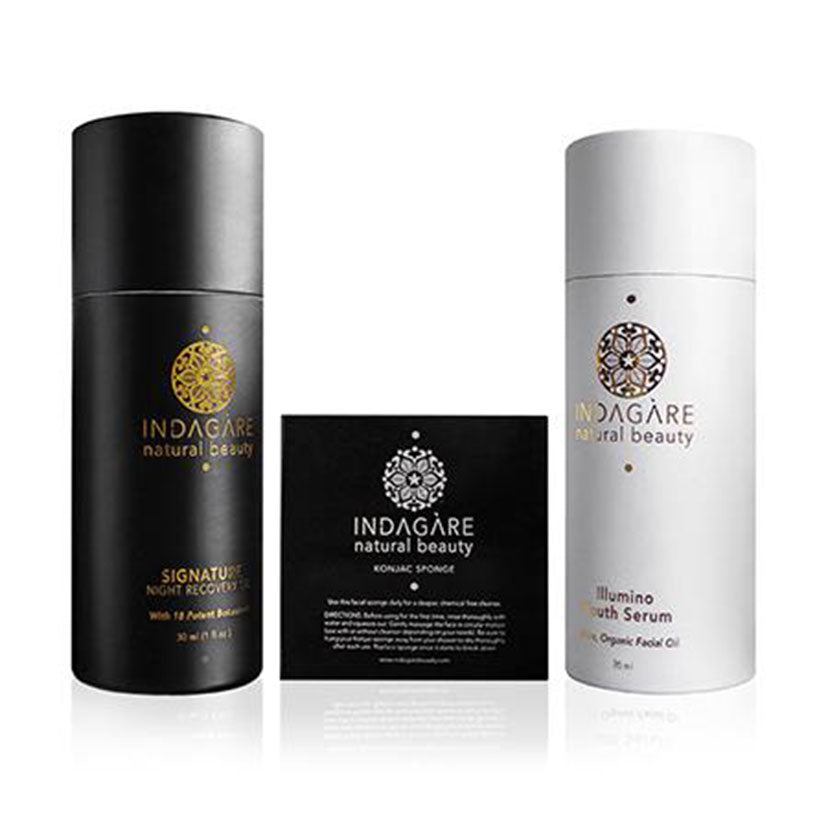
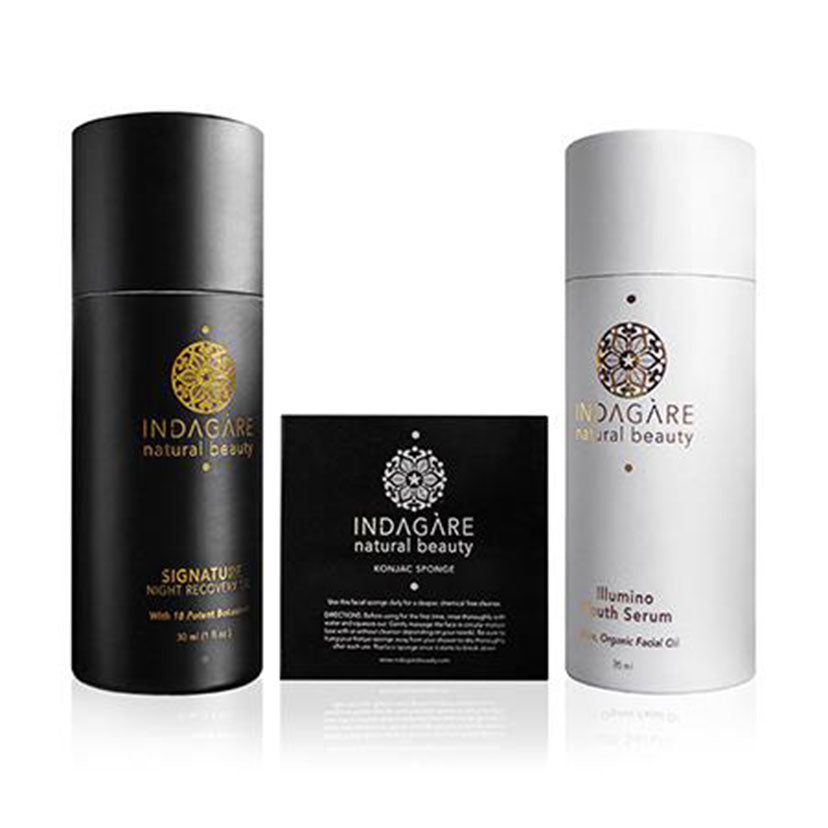
One multitasking ingredient we love is prickly pear seed oil ( Nigella Lawson is also a fan of prickly pear seed oil). Packed with antioxidants and fatty acids, polyphenols, amino acids, and vitamin K, this little-known elixir impressed us so much we created our organic Illumino Youth Serum around it!
Other skincare oils with proven antioxidant and anti-inflammatory powers include carrot seed, evening primrose, and rosehip. Even more specifically, pomegranate oil is said to inhibit matrix metalloproteinase (MMP), an enzyme that signals collagen breakdown!
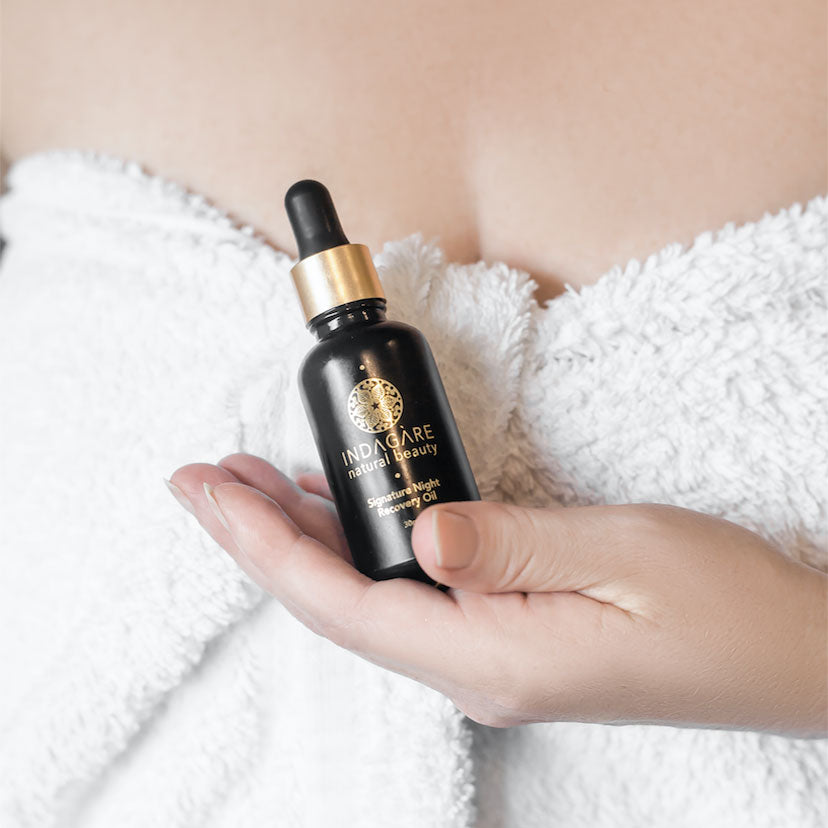
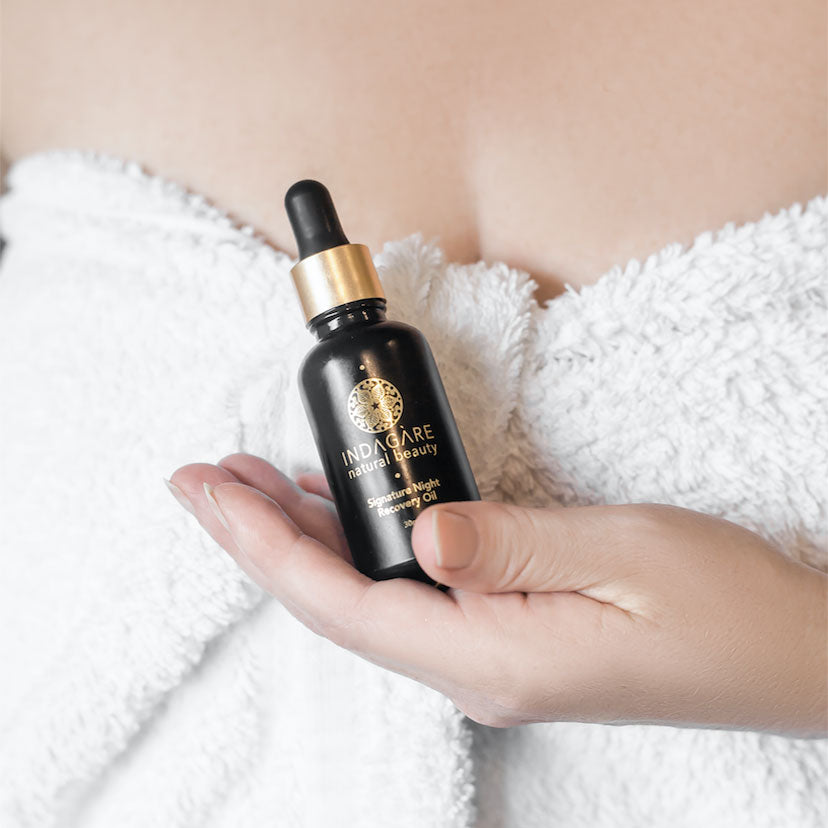
We use this in our Signature Night Oil - WINNER, Best Overnight Face Oil at the Beauty Shortlist Awards in 2023 - as a pro-collagen facial cocktail, with its 18 superstar botanicals working while we sleep.

- Steer clear of smoking This one’s a no-brainer for so many reasons. Case in point: smoking compromises the synthesis of collagen.
-
Make time for massage
Fans of facial massage will know how this ancient technique can help melt jaw tension, increase blood flow, and promote lymphatic drainage. The ‘sculpting’ effects might be temporary, but some believe that facial massage can also help activate cellular turnover and encourage the production of new collagen. -
Get a good night’s rest
Because so much of our body’s important repair work happens while we sleep, it makes sense to prioritise a restful slumber.
Should I be eating or drinking collagen?
Okay, now to the question of whether we should be adding a collagen shot to our morning coffee. Although collagen supplements have been around for decades, this slice of the beauty market has exploded in recent years. They work by delivering hydrolysed collagen or collagen peptides — collagen broken down into a more dissolvable form — usually from marine or bovine sources. These are broken down further in the gut with the idea being the amino acids are then taken up by the body as needed. You may have also seen or tried gelatine-rich bone broth.
Although some early case studies have been promising, the efficacy of ingestible collagen is still being tested. So, time will tell if this is a wellness bubble or breakthrough.
The main thing to note is, prepare for the long game. Good quality collagen will put a significant dent in your beauty budget, and you’ll probably have to wait around three months to see any results. And that’s three months of very consistent use. And what if you’re not keen on animal products? There are pro-collagen vegan supplements available but most of these are designed to ‘boost’ collagen with other nutrients. However, research is underway to develop a cultured vegan collagen dupe so stay tuned!
If you want to give it a go, most experts agree there’s no harm in ingesting collagen. But you still can’t beat a healthy diet, sun-safe habits, and a low-tox environment (coupled with a boost of antioxidant-rich hydration) as a recipe for happy, youthful skin.
Words: Nicole Deuble
Related article: How your skin repairs itself when you sleep