


Perimenopause Skincare: The Complete Guide to Managing Your Changing Skin
Your skincare routine has been working perfectly for years. And then, seemingly overnight, your skin decides to throw a tantrum that would make a toddler proud.
Suddenly you're dealing with dryness. And breakouts. At the same time. Your skin feels sensitive to everything. That serum you loved? Now it stings. Your moisturiser that was just right? Now it feels like you've applied actual air.
Welcome to perimenopause, where your skin rewrites all the rules and forgets to give you the memo.
If you're anywhere between your late 30s and early 50s and your skin has started acting like it belongs to someone else, you're not imagining it. And you're definitely not alone.
Let's talk about what's actually happening to your skin, why your old routine isn't cutting it anymore, and what actually works when your hormones are having a party you didn't RSVP to.
How does perimenopause actually affect your skin?
Here's the thing about perimenopause (that wonderful transition period before actual menopause): your oestrogen levels are fluctuating wildly. One day they're up, the next they're down, and your skin is along for this hormonal rollercoaster whether it likes it or not.
Oestrogen isn't just about reproduction – it plays a massive role in skin health. It stimulates collagen production, which is why less oestrogen means less collagen, which translates directly to thinner skin and more visible lines.
It helps your skin retain moisture by supporting the natural barrier, so as oestrogen declines, that barrier weakens and chronic dryness sets in.
It regulates oil production, which neatly explains the cosmic injustice of getting adult acne at the same time as your first fine lines. Fun times.
It affects skin thickness – your skin literally becomes thinner and more fragile. And it's part of what gives your skin its elasticity, the bounceback you used to have without thinking about it.
Oestrogen was quietly running that show the whole time!

And beyond hormones, you're also navigating years of accumulated sun damage finally deciding to show itself, a natural slowdown in your skin's ability to repair itself, sluggish cell turnover that leaves dead skin cells lingering on the surface longer than they should, a drop in natural oil production (ironic, given the breakouts), and an across-the-board increase in sensitivity and inflammation.
No wonder your skin is confused!
The six perimenopause skin changes nobody warns you about
If you've read another generic "skin changes after 40" article, you're probably bracing yourself for the usual lecture about wrinkles and sun damage. This isn't that. These are the changes we see again and again in the women who come to Indagare – the ones that don't get talked about enough.

1. The strangest dryness you've ever experienced
This isn't winter-dryness or the dryness you'd expect from getting older. This is skin that drinks moisturiser like it hasn't seen water in a decade and still feels tight twenty minutes later. It can be flaky, even on parts of your face that have always been oily. It feels almost hollow – like something's missing underneath the surface.
What's actually happening: your oil glands are producing less sebum, your barrier is letting moisture evaporate, and your dermis is holding onto less water than it used to. You can't out-cream this with a generic department-store moisturiser. You need ingredients that genuinely repair the barrier and replenish the lipids your skin has lost.
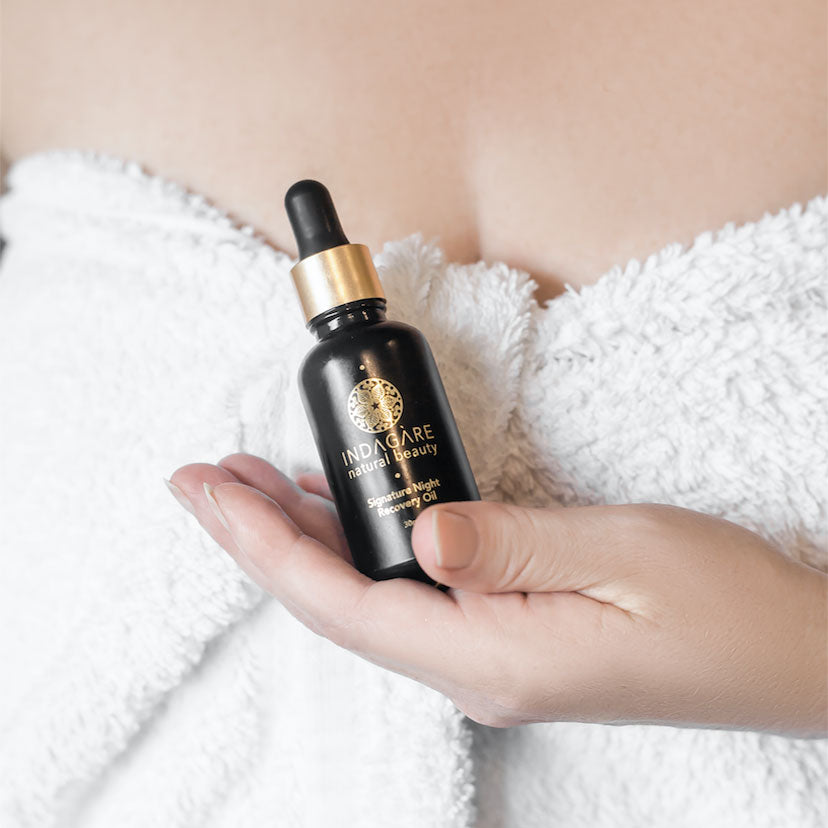
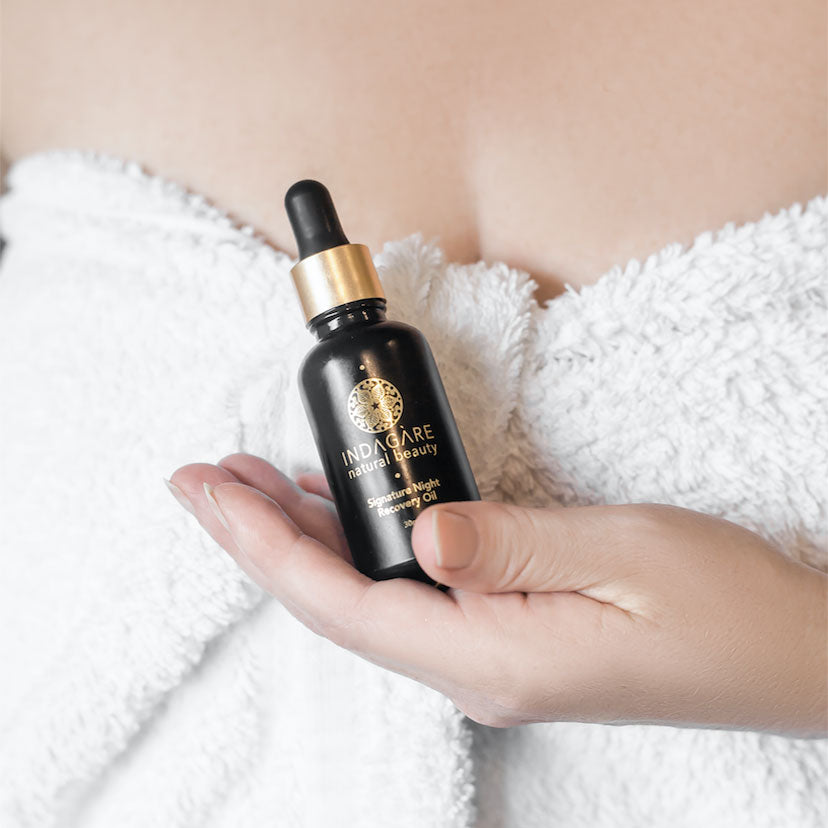
This is exactly why Indagare's range is built around waterless, nutrient-dense botanical oils – they actually feed the skin rather than just sitting on top of it.
2. Breakouts. At 45. With wrinkles. Yes, really.
Perimenopausal acne is the cruellest joke biology plays on us. The same hormonal shifts that are giving you fine lines are also triggering breakouts – usually along the jawline, chin and neck. It feels deeply unfair, and it is.
When oestrogen drops relative to testosterone (even though testosterone isn't increasing – it just appears more dominant), your skin's oil production gets confused. Some areas dry out. Other areas – usually the lower face – overproduce a thicker, stickier sebum that clogs pores and causes deep, painful, cystic-style spots.
Adult acne is its own special kind of hell IMO, because the products marketed at teenagers are often far too harsh for mature skin, while traditional anti-ageing products can make breakouts worse.
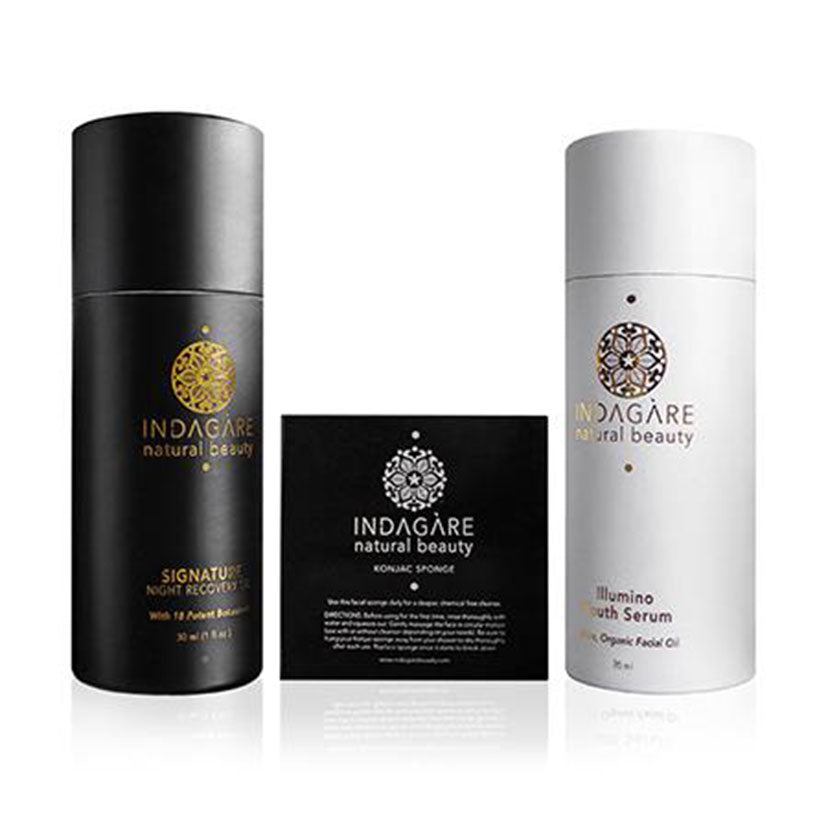
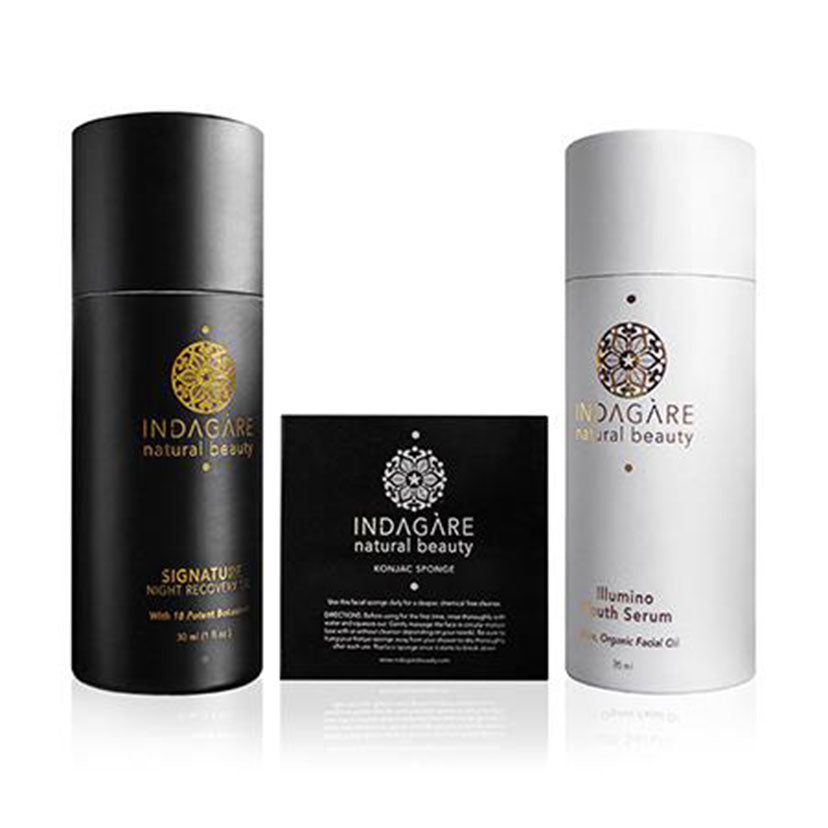
The answer isn't more stripping. It's gentler, smarter formulas that balance oil production without destroying the barrier. Our Illumino Youth Serum has a comedogenic rating of zero – meaning it won't clog pores – while still actively brightening and rebalancing the skin.

3. Sensitivity that came out of nowhere
You wake up one morning and the moisturiser you've used for seven years is suddenly stinging. Your favourite serum gives you redness. The fragrance in your bodywash is now intolerable. Your skin has become reactive – sometimes for the first time in your life.
This is your weakened barrier talking. When the skin barrier is compromised, irritants get through more easily and trigger inflammation. Add the hormonal inflammation already happening underneath, and your skin's tolerance for anything drops dramatically.
The fix isn't a "sensitive skin" product loaded with cooling agents that masks the issue. It's removing the irritants (synthetic fragrance, harsh sulphates, drying alcohols) and feeding the barrier with the lipids it needs to rebuild itself.
4. The "where did my glow go?" dullness
You can sleep well, drink your two litres of water, eat your leafy greens, and still look in the mirror to find a complexion that's gone grey. Flat. Lifeless. It's a particularly demoralising change because it's not a wrinkle or a spot you can point at – it's just an overall quality that's gone missing.
Cell turnover slows dramatically in perimenopause. Where your skin used to renew itself in about 28 days in your 20s, by your mid-40s that cycle can stretch to 45–60 days. Dead skin cells linger longer on the surface, scattering light and dulling your reflection. Combine that with reduced microcirculation and you get the grey complexion almost every perimenopausal woman recognises.
Gentle exfoliation, antioxidants, and oils rich in vitamin E and essential fatty acids are what bring that glow back. (Prickly pear seed oil – our hero ingredient – contains 150% more vitamin E than argan oil. It's our not-so-secret weapon for this exact problem.)

5. Hyperpigmentation that appears overnight
Sun damage from your 20s and 30s decides to make its grand debut in your 40s. Melasma – that patchy pigmentation across the cheeks, forehead and upper lip – can flare up dramatically during perimenopause because oestrogen instability affects the cells that produce melanin. Brown spots on cheeks, hands and décolletage can multiply. Skin tone becomes uneven in a way it never was before.
Aggressive lightening creams and lasers aren't your only options (and they're often the wrong ones for already-compromised skin). Consistent use of high-quality vitamin C, vitamin E and gentle botanical brighteners can fade pigmentation gradually without the irritation that triggers more pigmentation in the first place.
6. Hair thinning – yes, this counts as skincare
You'll notice it in the shower drain first. Then on your hairline. Then suddenly your part looks wider than you remember. Perimenopausal hair loss is one of the most under-discussed symptoms because it's so frightening – and most women try to ignore it for as long as possible.
This is the same oestrogen drop affecting the same follicle health. Hair becomes finer, falls out faster, grows back slower, and loses its natural shine. The skin of your scalp is part of your skincare ecosystem, and treating it like skin – feeding it, nourishing it, supporting circulation – makes a real difference.
Our Hair Renewal Oil was created specifically for this and remains one of the products customers email us about most often.

What is the best skincare for perimenopause? (And what to avoid)
The biggest mistake we see women make at this stage is doubling down on what worked in their 30s, or worse, panic-buying every anti-ageing serum on the market in the hope something sticks. Your skin is genuinely different now. The strategy has to change.
What helps: ingredient-rich, gentle, nutritive products that work with your skin's biology instead of against it. Look for cold-pressed botanical oils, vitamin E in its natural form, vitamin C from botanical sources like neroli, omega fatty acids, antioxidants, and barrier-repairing lipids.
Less product, used more consistently, beats a 12-step routine you can't keep up with.
What hurts: harsh actives stacked on top of one another (you do not need three forms of acid in your morning routine), synthetic fragrances, sulphates, drying alcohols, and – critically – endocrine-disrupting chemicals that interfere with your already-volatile hormones.
Parabens, phthalates and certain preservatives are known hormone disruptors, and putting them on perimenopausal skin is genuinely the last thing you need.
(We've written a whole guide on this if you want to dig deeper.)
The other thing worth saying: your perimenopausal skin doesn't need to be "fixed". It's not broken. It's adapting to a profound biological shift, and it deserves to be supported through that shift with care, not punished with aggression.
This is a mindset change as much as a product change.
The Indagare approach: skincare formulated specifically for this stage

Indagare wasn't built by a beauty conglomerate looking for a market opportunity. It was built by our founder Tanya, who – after spending tens of thousands of dollars on luxury skincare, prescription topicals and treatments that left her skin worse than they found it – realised nobody was making skincare for the actual biology of women in their 40s and beyond.
Everything we make is built around three principles: high-performance botanical ingredients sourced from the most pristine regions in the world (our prickly pear comes from women's co-operatives in Morocco), 100% synthetic-free formulations with no hormone disruptors, and waterless formulas so concentrated that you use less product per application.
If you're brand new and not sure where to start, our 3 Step Skincare Set is the simplest entry point – cleanse, treat, hydrate, designed specifically for mature and sensitive skin.
If you're further along in perimenopause and want a more comprehensive ritual, the Complete Skin Renewal System is the five-step ritual that targets every change we've covered above.
And if your number-one concern is the under-eye area and the visible tiredness perimenopause writes all over your face, the Recovery & Renewal Set is one of our most-loved combinations.
Note: One product is not going to change everything overnight. What works is the boring, beautiful truth of consistency – the right ingredients, used every day, for long enough to let your skin actually respond. Most of our customers see a meaningful difference within 6–8 weeks. Some see it sooner.
All of them tell us the same thing: they wish they'd started earlier.

Perimenopause skincare FAQ
How does perimenopause affect skin?
Perimenopause affects skin primarily through declining and fluctuating oestrogen levels. As oestrogen drops, the skin produces less collagen (causing loss of firmness), less sebum (causing dryness), and less efficient cell turnover (causing dullness). The skin barrier weakens, making skin more sensitive and reactive. Many women also experience hormonal acne, increased hyperpigmentation, and a general loss of glow. These changes can begin in your late 30s and continue throughout the perimenopause transition – which typically lasts 4 to 10 years before menopause itself.
What is the best skincare for perimenopause?
The best skincare for perimenopause is gentle, deeply nourishing and free from hormone-disrupting chemicals. Look for cold-pressed botanical oils high in vitamin E and essential fatty acids, vitamin C from natural sources, and barrier-repairing lipids. Avoid synthetic fragrance, sulphates, parabens, phthalates and aggressive actives that compromise an already-fragile barrier. Less is more – a simple, consistent routine of cleanser, serum and moisturiser will outperform a 12-step regimen. At Indagare, our Illumino Youth Serum and 3 Step Skincare Set are specifically formulated for this life stage.
What are the most common perimenopause skin changes?
The six most common perimenopause skin changes are: persistent dryness that doesn't respond to moisturiser, hormonal acne (often along the jawline), new sensitivity and reactivity to products, loss of glow and a dull complexion, increased hyperpigmentation and uneven skin tone, and loss of firmness and elasticity. Many women also experience scalp and hair changes – thinning, finer strands, slower growth – which respond well to targeted scalp and hair treatments.
When does perimenopause skin start changing?
Perimenopause skin changes can start anywhere from your late 30s to your mid-40s, though most women notice the first signs around age 40–42. Early changes are often subtle – your usual products feeling slightly less effective, occasional unexplained dryness, or your first hormonal breakout in years. By mid-perimenopause (typically 45–50), changes become more obvious: visible firmness loss, persistent dullness, hyperpigmentation, and barrier sensitivity. The earlier you adapt your routine, the better your skin responds.
Should I use retinol during perimenopause?
Retinol can be effective during perimenopause for cell turnover and collagen support, but it needs to be approached with care because perimenopausal skin is often more sensitive and reactive. Many women find traditional retinol too aggressive at this stage. A gentler alternative is bakuchiol (a plant-based retinol alternative), or focusing on the antioxidant and barrier-repairing benefits of vitamin-E-rich botanical oils, which support skin renewal without the irritation. If you do use retinol, start slowly – 2–3 nights per week – and always pair with deep, nourishing hydration.
Does diet affect perimenopause skin?
Yes – significantly. What you eat directly affects inflammation, hormone balance and skin function during perimenopause. Foods rich in omega-3 fatty acids (oily fish, walnuts, flaxseed), antioxidants (berries, leafy greens, dark chocolate), and phytoestrogens (flaxseed, soy, legumes) can help support skin health from the inside. Reducing refined sugar, ultra-processed foods and excess alcohol makes a noticeable difference to both breakouts and dullness. Hydration matters more than ever – but topical hydration is just as important as drinking water, since perimenopausal skin loses moisture more quickly through the barrier.
A final word...
If there's one thing we want you to take away from this guide, it's that what's happening to your skin right now isn't a personal failing. It isn't because you didn't moisturise enough in your 30s, or wear enough sunscreen, or spend enough on serums. It's biology. And biology can be supported.
This stage of life is, in so many other ways, extraordinary. You know yourself better than you ever have. You're less interested in being asked to perform and more interested in things that are actually true. Your skin can absolutely look beautiful, healthy and luminous through perimenopause and well beyond – it just needs you to meet it where it is, with products that respect what your body is doing.
If you want to feel what genuinely nutritive, properly-formulated skincare feels like, start here. It's a very different experience from anything you've tried at the chemist or the department store. And if you have questions – about your skin, your routine, anything – email us. We read every message personally.


