


Where to Buy Rejuvenating Serums for Tired Mature Skin in Australia
If you've ever stood in the beauty aisle of a department store, overwhelmed by the sheer volume of ‘rejuvenating’ and ‘'anti-ageing’ serums, you're not alone. Rows upon rows of promises in beautiful packaging, each claiming to be the answer to your skin concerns.
Sales assistants who seem to think you need the entire range. Price tags that make you wonder if the serum is actually made of liquid gold.
The Australian beauty market is flooded with options, and for mature skin that genuinely needs more targeted support, sorting through the marketing claims to find products that actually work can feel exhausting.
How do you tell the genuine performers from the overhyped disappointments?
Let's cut through the noise and talk about what actually matters when choosing a rejuvenating serum – and where to find quality options in Australia.
What Makes a Serum 'Rejuvenating'?
The term 'rejuvenating' gets thrown around freely in beauty marketing. Everything from a basic moisturiser to an eye cream gets labelled rejuvenating if the marketing department thinks it'll sell. But scientifically, rejuvenation requires addressing specific mechanisms.
Supporting Collagen Production
True rejuvenation supports your skin's ability to produce and maintain collagen. For mature skin, this becomes increasingly important as natural production declines – remember, we lose about 1-2% of our collagen per year after our mid-twenties, and this accelerates during menopause.
Research shows that antioxidants like vitamin E help protect existing collagen from degradation. Studies in Frontiers in Pharmacology confirm that vitamin E protects against oxidative stress that accelerates collagen breakdown.
So while no topical product can magically restore all the collagen you've lost, the right serum can protect what you have and support ongoing production.

Barrier Function Support
A compromised skin barrier makes skin look tired, dull, and aged. It's like the difference between a fresh grape and a raisin – both are grapes, but one has lost its moisture. Effective rejuvenating serums support barrier integrity, helping your skin hold onto hydration.
According to Oregon State University's Linus Pauling Institute, essential fatty acids like linoleic acid play vital roles in maintaining skin barrier function. Topical application of EFA-rich oils can effectively deliver these nutrients to skin.
Antioxidant Protection
Free radical damage accelerates aging. These unstable molecules are generated by everything from UV exposure to pollution to the normal process of cellular metabolism. Botanical oils rich in antioxidants help neutralise this damage before it can affect your skin's structure.
Where to Shop in Australia
Once you know what you're looking for, the question becomes where to find it. Here's a realistic assessment of your options.
Department Stores
Major department stores carry mainstream luxury brands, but many focus on synthetic formulations. The advantage is you can test products before buying and get samples. The disadvantage is the pressure from sales staff who are often incentivised to push particular brands.
If you're specifically seeking natural botanical options, you'll need to read ingredient lists carefully. Marketing terms like ‘natural’ and ‘botanical’ aren't regulated, so a product can contain one natural ingredient among twenty synthetic ones and still market itself as natural.
Specialty Natural Beauty Retailers
Stores specialising in natural beauty typically carry brands committed to botanical formulations. Staff often have better product knowledge about ingredients and their benefits. You're less likely to face high-pressure sales tactics, and the store has already done some vetting of the brands they carry.
The downside is limited locations in many Australian cities, and prices can be higher due to smaller purchasing volumes.
Online Direct-to-Consumer Brands
Many quality natural skincare brands sell directly to consumers online. This approach often means fresher products (less time sitting in warehouses), better value (no retail markup), and more detailed ingredient information.
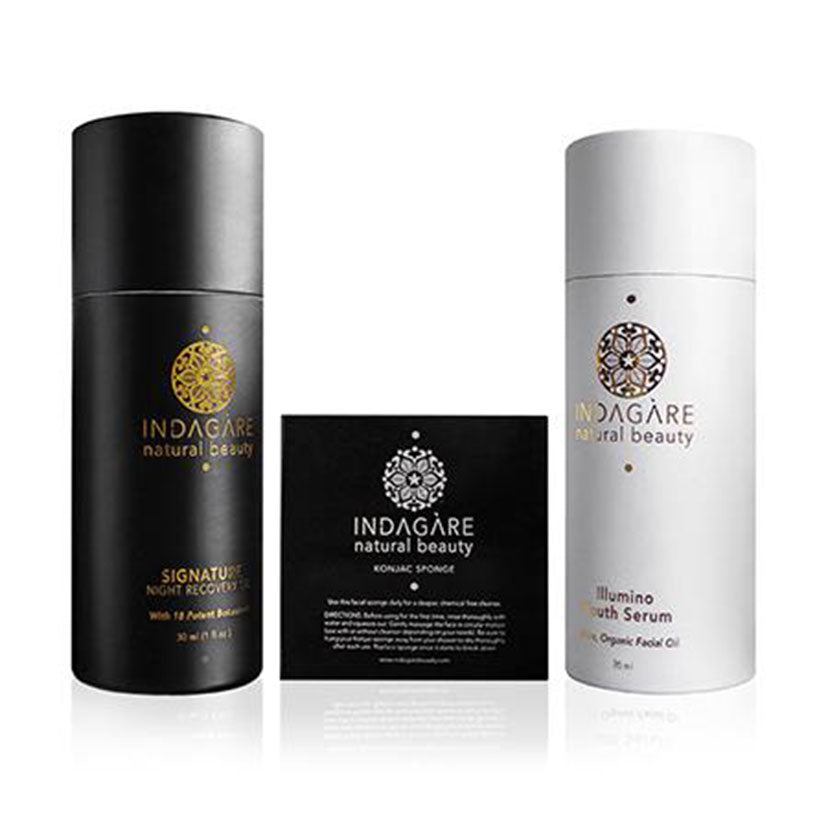
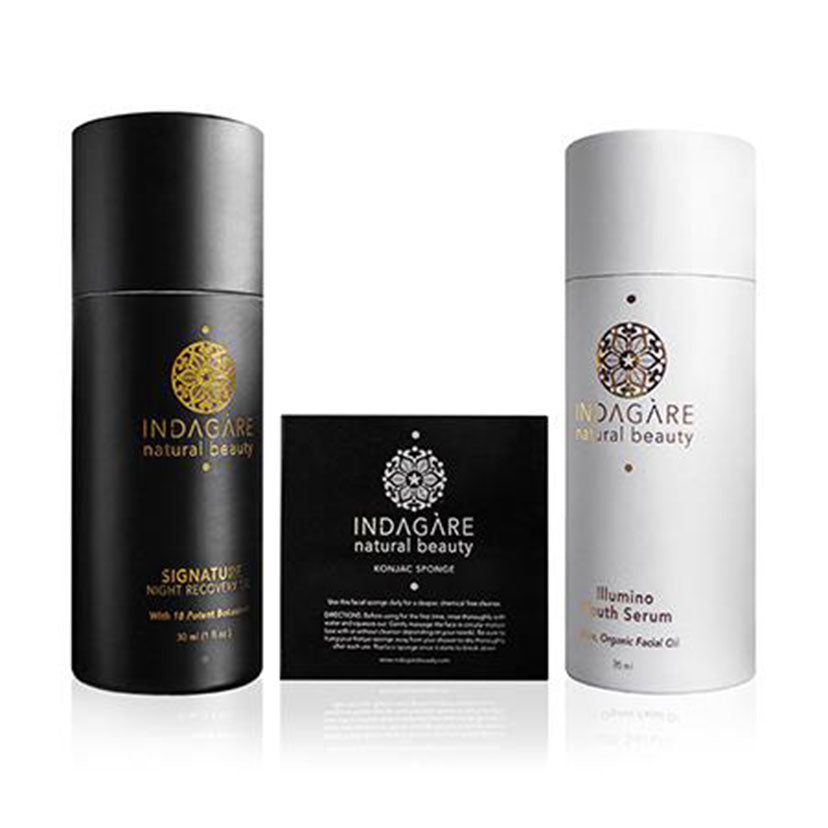
At Indagare, we chose the direct-to-consumer model specifically because we wanted to maintain complete control over quality and freshness. Our Illumino Youth Serum, made with 100% certified organic prickly pear seed oil, goes from production to your bathroom cabinet without sitting on warehouse shelves for months.
The obvious downside of online shopping is you can't test products first. And this is precisely why we offer smaller trial sizes and have a 30-day money back return policy.
Pharmacies and Chemists
Australian pharmacies increasingly stock quality skincare. Look for pharmacist-recommended ranges that focus on efficacy rather than marketing. Pharmacists can also offer advice about how products might interact with any medications you're taking – something department store staff generally can't do.
What to Look For on Labels
Becoming a label reader is one of the best things you can do for your skin. Here's what to look for.
Ingredient Quality Indicators
Look for ‘certified organic,’ ‘cold-pressed,’ and ‘unrefined’ when it comes to botanical oils. These processing methods preserve the active compounds that make oils effective. Heat extraction and refining can destroy the very nutrients you're paying for.
Third-party certifications like COSMOS, ACO, or USDA Organic provide assurance that organic claims have been independently verified.
Concentration Matters
Ingredients are listed in order of concentration, so an ingredient listed at the end of a long list is present in minimal amounts. For serums, active ingredients should appear near the top.
Be particularly wary of products that list a 'hero' ingredient prominently on the front but have it near the end of the ingredient list. That's marketing, not formulation.

Avoid Unnecessary Fillers
Long lists of synthetic ingredients, fragrances, and fillers often indicate products padded with cheap ingredients (including even water!) rather than concentrated actives. A product with a shorter ingredient list of quality components often outperforms one with dozens of ingredients.
Watch out for multiple types of silicones, synthetic fragrances (often listed as 'parfum'), and alcohols that can dry skin. These are cheap fillers that make products feel nice temporarily but don't deliver long-term benefits.

Value vs. Price
Let's talk about money, because skincare can range from a few dollars to hundreds.
The most expensive serum isn't necessarily the best, but extremely cheap options often mean compromised ingredient quality. Quality botanical oils cost money to source and process. If a product claims to contain premium ingredients at a rock-bottom price, something doesn't add up.
Consider cost per use rather than bottle price. A concentrated botanical oil serum used in small amounts can last months, making the per-use cost comparable to much cheaper products that require more volume.
Our prickly pear seed oil serums, for instance, require only 2-3 drops per application. A single bottle lasts 2-3 months of daily use, changing the value equation significantly. That 'expensive' serum might actually cost less per day than your morning coffee.
Also consider what you're replacing. If a quality serum eliminates the need for three other products, the overall cost might actually decrease.
What Real Users Report
Ultimately, the best measure of a product is results. Janelle shared her experience: ‘I found it has really smoothed my lines around my eyes. It feels beautiful to apply.’
Results like these come from consistent use of quality products – not from chasing the newest trend every few weeks.
Emma told us: ‘I spent years buying whatever was on sale or whatever the sales assistant recommended. I had a bathroom full of products and skin that wasn't improving. When I finally invested in fewer, better products, everything changed.’
Finding the right rejuvenating serum in Australia means looking beyond marketing to understand what your skin actually needs, then seeking products that deliver those specific benefits without unnecessary additives. Your skin is worth the research.
With love,
Cath x