


Toxic Ingredients in Skincare: The Hidden Hormone Disruptors to Avoid
Why Your Expensive Skincare Stopped Working After 40...
"Effects can occur from a very small amount of a chemical, and these ‘low dose effects’ can be different than the effects of higher doses. This makes the outcomes difficult to predict. Further, health effects may not show up until many years after exposure occurred, making it hard to connect cause and effect." Quote from TEDX Endocrine Disruption Exchange
You may be doing everything right when it comes to eating healthy—choosing fresh and organic foods over heavily processed and preservative laden foods, eating nutrient-dense meals, and watching your coffee and alcohol intake. But did you ever stop and consider that what you're putting on your skin from the outside could be causing harm to your health?
One of the most infamous and alarming examples is the Johnson & Johnson baby powder scandal. In 1982, world renowned epidemiologist, Dr Daniel Cramer, linked Johnson & Johnson's baby powder to ovarian cancer (it is alleged J&J knew since the 60s and did nothing). If you've heard of the case but are not clear on the details, this Reuters article is a good read, if somewhat disturbing.
The 5 Most Common Toxic Ingredients Lurking in Your Skincare
Before we dive deep, here's your quick reference guide. Screenshot this, save it, keep it handy when you're shopping. These are the nasties you want to avoid:
Toxic Ingredient |
Where It Hides |
Why It's Harmful |
| Parabens (methylparaben, propylparaben, butylparaben) | Moisturisers, foundations, shampoos, body washes |
Mimics oestrogen, found in breast cancer tissue, disrupts hormone balance |
|
Phthalates (DEP, DBP, DEHP) |
Fragrances, nail polish, hair spray (often hidden as "fragrance") |
Linked to reproductive issues, thyroid disruption, premature death in studies |
|
Oxybenzone |
Sunscreens, moisturisers, foundations, lip products |
Rapidly absorbed through skin, toxic to coral reefs AND your hormones |
|
Triclosan |
Antibacterial soaps, toothpaste, deodorants, hand sanitisers |
Causes antibiotic resistance, affects thyroid function, bioaccumulates in body |
|
Resorcinol |
Acne treatments, hair dye, anti-ageing products |
Known skin irritant that disrupts thyroid and hormone function |
The scary truth: These ingredients are in products you probably use every single day. Your moisturiser. Your foundation. Your shampoo. Even your "anti-ageing" serum might be ageing you faster by disrupting your hormones.
Another example is when Dr Philippa Darbre, a UK scientist, found parabens, a chemical preservative in many cosmetics, in breast tissue in 2004.
While unravelling disease is a monumental task, and not everything in our vanity or medicine cupboard wants to harm us, for years now, consumer health advocates and some researchers have warned that at least some ingredients commonly used in personal care and beauty products are unsafe. And, Scientists have uncovered that even minimal amounts of chemicals we encounter daily can disrupt our hormones.
So, it isn't surprising that more and more of us are looking closer at the ingredient lists of the products we use in our skincare routine to see if they contain hidden dangers in the form of unnecessary toxins and endocrine disruptors.

What Does My Endocrine System Do?
Your endocrine system is where all those hormones come from - it's the collection of glands such as the pituitary, thyroid, adrenal, ovaries and testicles that produce hormones that regulate everything from metabolism to sexual function, sleep, and mood.
Your endocrine system can be affected by everyday toxins and pollutants that can alter the way they are supposed to behave, earning them the name 'endocrine disruptors. These disruptors can be responsible for irregular periods and breakouts and, very rarely, illnesses and cancer.
The Most Common Endocrine Disruptors
Your endocrine system is where all those hormones come from - it's the collection of glands such as the pituitary, thyroid, adrenal, ovaries and testicles that produce hormones that regulate everything from metabolism to sexual function, sleep, and mood.
Your endocrine system can be affected by everyday toxins and pollutants that can alter the way they are supposed to behave, earning them the name 'endocrine disruptors. These disruptors can be responsible for irregular periods and breakouts and, very rarely, illnesses and cancer.

Leading the assault on our hormones are some of the most commonly used ingredients in skincare. It's gotten to the point where even the WHO has issued statements about it. Pregnant women and children are most vulnerable to these exposures, but what's worse is that these exposures will likely not become apparent until much later on.
Yes, it probably does freak you out a little. But now that you know, you can do something about it by avoiding skincare products containing these unnecessary additives that could be damaging your endocrine system.
Why This Matters MORE After 40
Why Toxic Ingredients Hit Harder When Your Hormones Are Already Changing
Here's something most skincare brands won't tell you: if you're over 40 and going through perimenopause or menopause, your body is already dealing with hormonal chaos. Oestrogen is fluctuating wildly. Your skin is changing. Your body is trying to find a new balance.
What happens when you combine hormonal changes with hormone-disrupting skincare:
- Your skin becomes MORE sensitive – That redness and irritation? Could be the parabens in your moisturiser making things worse.
- Breakouts get worse – Hormone-disrupting chemicals can trigger more hormonal acne, especially around your jaw and chin.
- Your metabolism struggles – Endocrine disruptors affect your thyroid, which controls metabolism. Weight gain during menopause? These chemicals don't help.
- Sleep issues intensify – Your endocrine system regulates sleep. Disrupt it, and those 3am wake-ups get even worse.
- Hot flushes may worsen – Some studies suggest xenoestrogens (synthetic oestrogen-like chemicals) can intensify menopausal symptoms.

And then you slather on products loaded with endocrine disruptors – chemicals that mimic or block your hormones.
It's like trying to tune a piano while someone's banging on the keys.
The point? When you're in your 40s and 50s, switching to clean, hormone-safe skincare isn't just nice to have – it's essential for supporting your body through this transition rather than sabotaging it.
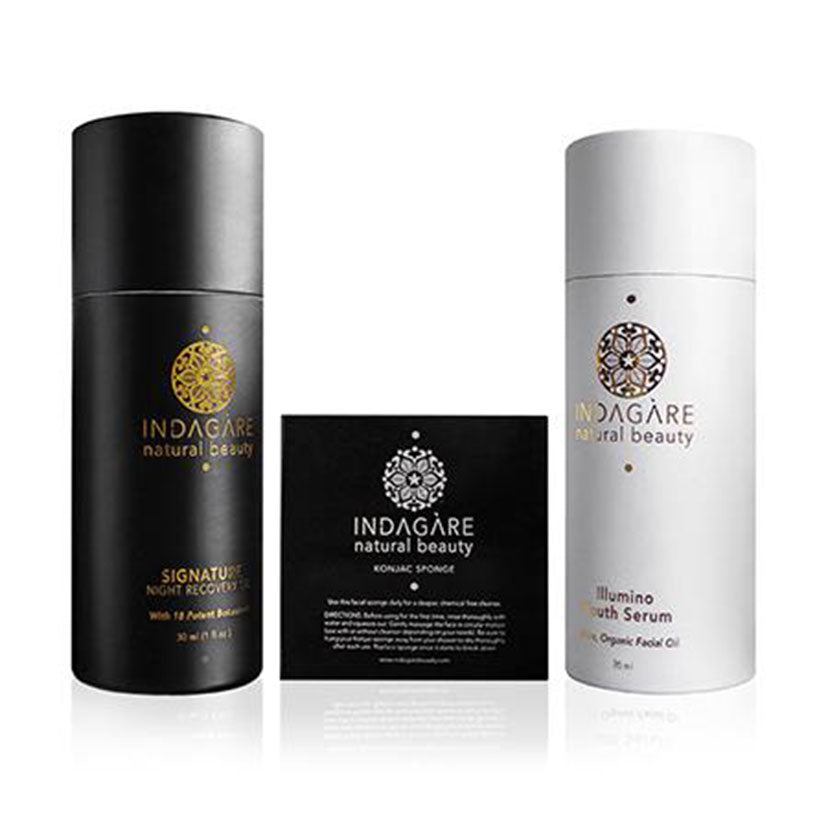
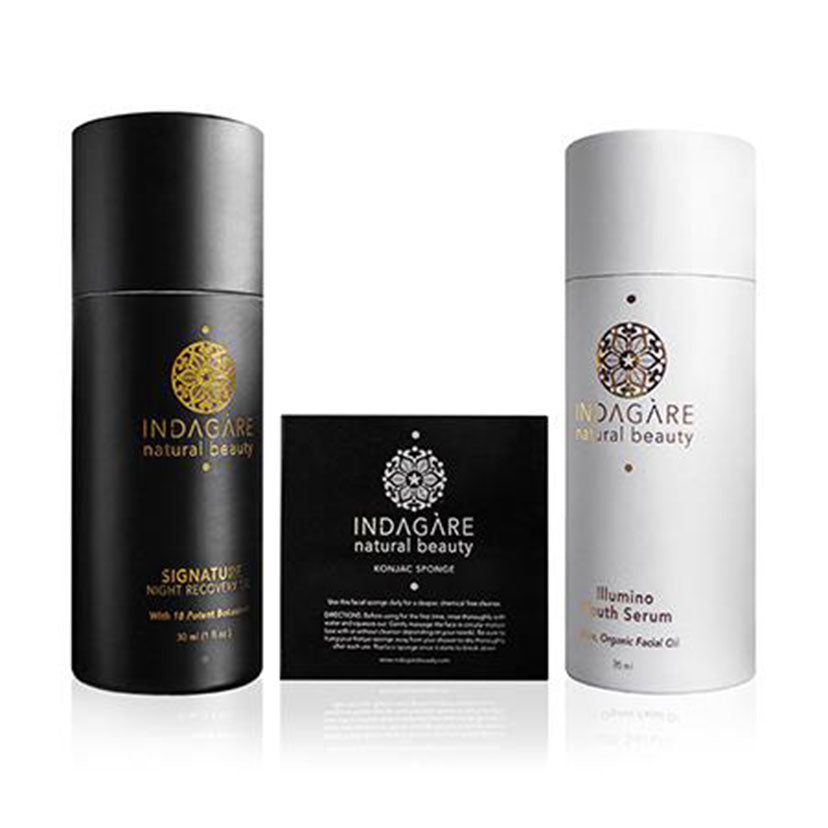
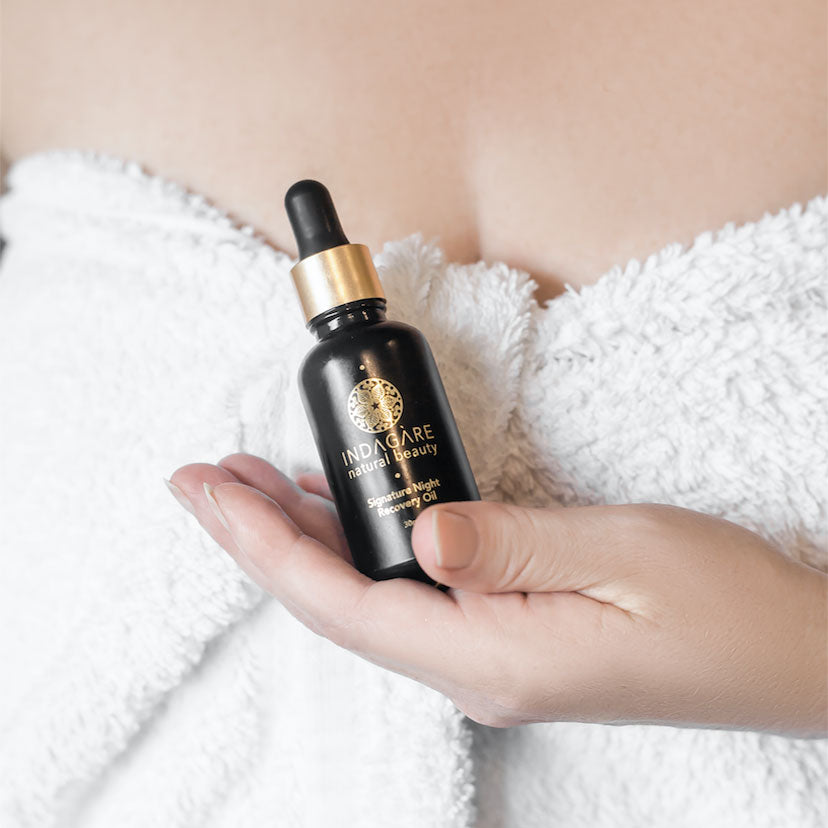
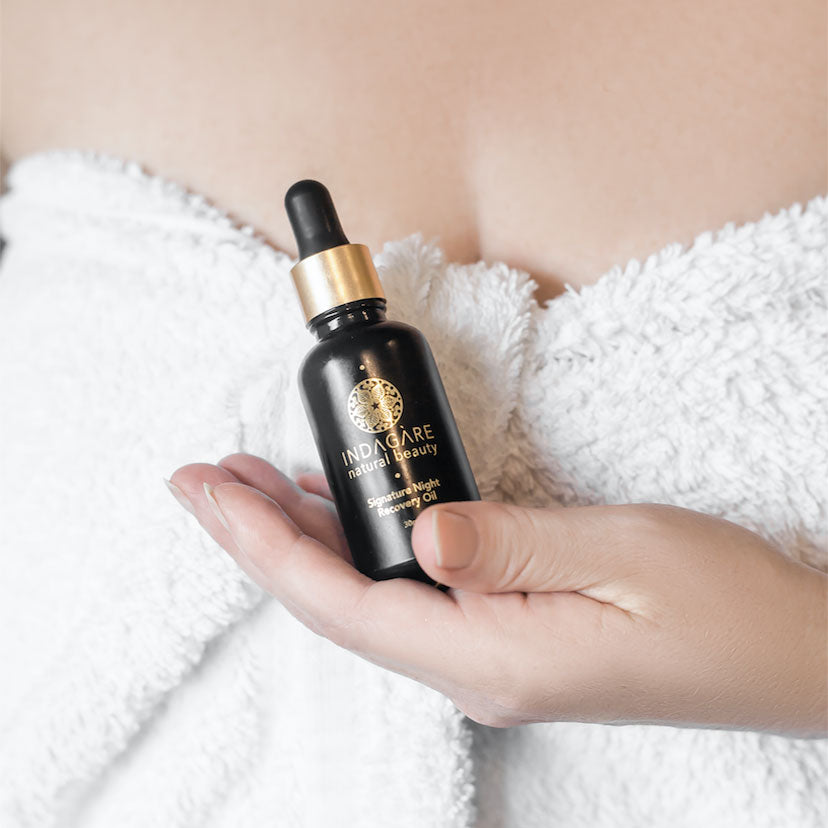
This is exactly why Indagare was created. Because women going through significant life changes deserve skincare that WORKS WITH their bodies, not against them.
Toxic Ingredients in Skincare: What to Look For on Labels
The Endocrine Disruption Exchange is a brilliant resource by TEDX. For 16 years, a team evaluated and interpreted scientific evidence on the effects of common chemicals to prevent harm to human and animal health.
In the meantime, keep reading as we share some of the common ingredients you want to go and check your product labels for - and toss out anything that has any of these endocrine disruptors listed.

Resorcinol
This endocrine disruptor is mostly used as a preservative, though you'll also see it for antiseptic and disinfectant purposes. It's found in topical acne treatments and those to treat skin conditions like eczema and psoriasis. What's most fascinating is that it is known to irritate the skin, yet it is in your hair dye and all these other things you likely use regularly. Beware of resorcin, 1,3-benzenediol, and 1,3-dihydroxybenzene (m-hydroxybenze, m-dihydroxyphenol) to avoid it.
Oxybenzone
This sunscreen agent and UV absorber is supposed to protect you. It's also used in moisturiser, foundation, nail polish, lip products, and shampoos and conditioners. Your body absorbs it quite readily, though. And here's the thing… it's toxic to coral reefs. So, if it causes them damage, imagine what it's doing to you! Steer clear of products with oxybenzone, benzophenone and derivatives, and sulisobenzone.
Triclosan
Stay away from triclosan and triclocarban. This active ingredient serves as a preservative and antibacterial agent for soaps, mouthwash, antiperspirants, toothpaste, etc. Since it bioaccumulates in the environment, it may be what is causing antibiotic resistance and has been shown to affect autoimmune diseases.
Phthalates
Indeed, one of the worst there out there are those phthalates. BPA is found in cans and bottles and some of the toys that our children play with. But the worst part of it is that other types of phthalates aren't listed on your labels. DEP (diethyl phthalate) is used in nail polish and fragrances. Thankfully in Australia and the EU, many phthalates have been banned in cosmetics, including dibutylphthalate, diethylhexylphthalate, diisobutylphthalate and di(methyloxyethyl) phthalate (DMEP). On labels, check for BPA, DEP, DBP, and DEHP. Anything that simply lists' fragrances' should also be questioned as it's usually a chemical cocktail you're liberally dousing your skin in.
Parabens
Parabens are preservatives that should really make you think twice because they can mimic estrogen. Parabens have been found in human breast cancer tissue too, as mentioned earlier. This nasty compound has no benefits (there are safe preservatives formulators can use).
How to Avoid Toxic Ingredients in Your Skincare Routine
While that list above isn't nearly complete, it's a good start in getting you to re-examine what ingredients you're slathering all over your skin. If you want to make a change for the better and protect yourself from future health issues, there are some things you can do.
- Avoid these nasty endocrine disruptors
The most obvious thing is to avoid these chemical agents mentioned here as much as possible. Reducing your exposure to them will minimise damage to your health. Read labels.
- Say ‘no’ to plastic
Packaging made of plastic is another problem, especially drink bottles that may have travelled in the heat or plastic containers used to microwave. When it comes to single use plastic, it is not sustainable for the earth, but it also potentially puts you up close and personal with these hormone disruptors. With personal- care and beauty products, try to use glass packaged products (some bathroom products are hard to put into glass safely, but you'll experience huge wins by going for low-hanging fruit such as food and drink packaging and choosing glass or a material other than plastic personal care products where possible). As a side bonus, being thoughtful of these concerns will also benefit the environment.
- Never use synthetic fragrances
Synthetic fragrances are easy to spot because they will be labelled as 'fragrance' on your products - and there can be up to 4000 chemicals in a 'frangrance'. These are usually made of those phthalates, though, which can disturb your thyroid and have been suggested to cause male reproductive issues. If you want to smell as lovely as a flower, go for natural perfumes that list essential oils and botanical ingredients. These will give you a pleasant aroma without any of those nasty chemicals. Breast Cancer Prevention has more information on frangrances and why you want to avoid them here.

The Indagare Difference: Clean Beauty That Actually Works
Look, we get it. You've probably heard "natural" and "clean" beauty promises before. Brands slap "organic" on the label and charge you twice as much for a product that doesn't actually work.
We're not that brand.
Indagare was created specifically for women in their 40s and 50s whose skin is changing – women who are dealing with perimenopause, sensitivity, dryness, hyperpigmentation, and the kind of frustration that comes from spending serious money on products that either don't work or actively make things worse.

Discover our complete range of clean, award-winning skincare
Here's what makes Indagare genuinely different:
Zero Toxic Ingredients. Zero Compromise.
Every single product is:
- 100% synthetic-free – No parabens, phthalates, endocrine disruptors, or hormone-interfering chemicals
- Waterless formulations – Which means we need ZERO preservatives (not even the natural ones)
- PETA cruelty-free certified – Because ethics matter
- Ethically sourced from women's cooperatives – Supporting women in Morocco who harvest our ingredients using traditional methods
Formulated for Changing Skin
We don't just avoid the bad stuff. We actively include the GOOD stuff:
- Prickly Pear Seed Oil – The highest Vitamin E content of any oil, clinically proven for anti-ageing
- Blue Butterfly Pea Flower – Boosts skin hydration by 70% (yes, there's research to back that up)
- Cold-pressed botanical oils – Rich in essential fatty acids that your changing skin desperately needs
Award-Winning Results
Our products have won Editor's Choice awards at the global Beauty Shortlist Awards not once, but multiple times. Because they actually work.
The Science AND the Soul
We believe skincare should nourish both your skin and your values. Every purchase supports:
- Fair wages for Moroccan women
- Sustainable harvesting practices
- Preservation of traditional knowledge
- Your right to know exactly what you're putting on your skin
No greenwashing. No questionable "natural" ingredients. No hormone disruptors hiding under vague labels like "fragrance."
Just pure, potent botanicals that work with your body, not against it.
Your Questions About Toxic Ingredients in Skincare, Answered
Q: Are toxic ingredients in skincare really that dangerous, or is this fear-mongering?
A: It's not fear-mongering – it's science. The WHO, various cancer research organisations, and peer-reviewed studies have all confirmed that certain chemicals commonly used in skincare act as endocrine disruptors. The tricky part is that effects can take years to show up, making it hard to connect cause and effect. But would you rather wait to find out? We'd rather play it safe.
Q: How do I know if my current products contain toxic ingredients?
A: Check the ingredient list. Look for the specific names we've listed: parabens (anything ending in -paraben), phthalates (DEP, DBP, DEHP), oxybenzone, triclosan, and resorcinol. If you see "fragrance" or "parfum" listed, that's usually code for a chemical cocktail that can include phthalates. When in doubt, Google the ingredient or use apps like Think Dirty or EWG's Skin Deep.
Q: What does "clean beauty" actually mean?
A: Honestly, it can mean different things to different brands because it's not regulated. For Indagare, clean beauty means: no synthetic chemicals, no endocrine disruptors, no parabens, no phthalates, no synthetic fragrances. Just pure botanicals. We're also waterless, which means we don't need preservatives at all – including the "natural" ones that some brands use as alternatives.
Q: Are parabens in small amounts still harmful?
A: This is where it gets complicated. The beauty industry argues that small amounts are safe. But here's the thing: you're not using just one product. You're using cleanser, serum, moisturiser, sunscreen, makeup, shampoo, conditioner, body lotion... The exposure adds up. Plus, research shows that even low-dose exposure to endocrine disruptors can have effects, and these effects can be different (and sometimes worse) than high-dose exposure. Why take the risk when there are safe alternatives?
Q: Is natural skincare always safer than conventional?
A: Not automatically, no. "Natural" isn't regulated either, and some natural ingredients can still cause irritation or allergic reactions. The key is looking for brands that are transparent about their ingredients, third-party certified (like PETA cruelty-free), and actually understand formulation science. Natural AND effective – that's what you want.
Q: What about preservatives? Don't I need them to keep products safe?
A: Yes, if your product contains water, you absolutely need a preservative system to prevent bacterial growth. BUT – not all preservatives are created equal. Some brands use safer alternatives like radish root ferment or potassium sorbate. At Indagare, we side-step the issue entirely by formulating waterless products (oils, powders). No water = no need for ANY preservative. Simple.
Q: Can switching to clean skincare actually improve my skin?
A: Many women report that when they switch from conventional to clean skincare, their skin becomes less reactive, redness reduces, and hormonal breakouts improve. Why? Because you're removing the irritants and hormone disruptors that were making things worse. Your skin can finally focus on healing instead of fighting chemicals.
Q: How long does it take to "detox" from toxic skincare ingredients?
A: Some chemicals leave your system within days, others can take months. Phthalates, for example, can be detected in your body within hours of use but also clear relatively quickly once you stop using them. The good news? Your skin can start looking and feeling better within 2-4 weeks of switching to clean products as inflammation reduces.
Q: Are expensive mainstream brands better than cheap ones when it comes to toxic ingredients?
A: Not necessarily. Price doesn't equal safety. Some luxury brands still use parabens, synthetic fragrances, and other questionable ingredients. Always read the ingredient list, regardless of the price tag. Some of the most expensive "anti-ageing" creams are loaded with hormone disruptors.
Q: What should I do with my old products that contain these ingredients?
A: If you're concerned, phase them out gradually or toss them immediately – your choice. Don't feel like you have to finish the bottle just because you spent money on it. Your health is worth more. Consider it an investment in your future self. And next time, you'll know what to avoid.