


How to Fade Hyperpigmentation Naturally (Without Harsh Acids or Lasers)
Let's talk about the spots on your face that you didn't ask for and definitely don't want.
You know the ones. Those dark patches that showed up sometime in your 30s or 40s and decided to make themselves at home. The uneven tone that no amount of foundation quite manages to cover. The stubborn marks that seem to laugh in the face of your expensive "brightening" serum.
Hyperpigmentation. Melasma. Age spots. Dark spots. Sun damage. Hormonal pigmentation.
Whatever you want to call it, it's frustrating as hell.
And if you've been down the conventional treatment route, you know it often involves harsh acids, potential irritation, sensitivity, and a lot of "it'll get worse before it gets better" reassurances.
But here's something they don't always tell you: there's another way.
A gentler, more patient approach using botanical oils and natural ingredients that actually work WITH your skin rather than attacking it.
Let me show you how.
What Actually Causes Hyperpigmentation?
Before you can fade it, it helps to understand it. Hyperpigmentation is simply your skin making too much melanin – the pigment that gives skin its colour – in certain spots. The question is what's switching that overproduction on, and usually it's one of a few familiar culprits, often more than one at once.
Sun exposure is the big one. UV light tells your skin to produce more melanin as a defence mechanism, and after years of it you get the freckling, the patchiness and the age spots.
Then there are hormones, the sneaky one – melasma tends to flare with pregnancy, perimenopause, menopause and hormonal contraception, showing up as larger patches across the cheeks, forehead and upper lip.
Mostly, though, it's a combination. Hormonal change plus sun exposure plus a bit of inflammation is the perfect storm – which is also why a one-dimensional “fix” rarely does the job.
Inflammation plays its part too: acne, eczema, psoriasis, or simply being too rough with your skincare can all trigger excess melanin, which is why a breakout so often leaves a dark mark behind long after the spot itself has gone.
And ageing quietly stirs the pot – melanin production becomes less regulated over time, so pigmentation can appear in places that have barely seen the sun.

The Problem with Conventional Treatments
Look, I'm not going to pretend conventional treatments don't work. Hydroquinone, tretinoin, glycolic acid and laser all have their place, and for some people they're the right call. The trouble is what comes attached to them.
Hydroquinone is effective but controversial – it can't be used long term and is banned outright in some countries.
Strong acids like AHAs and BHAs can leave sensitive or mature skin irritated and more reactive to the sun, which can ironically lead to more pigmentation.
Lasers are expensive, can be painful, need downtime, and carry real risk on darker skin tones.
And retinoids, brilliant as they are, often bring dryness, irritation and a purging phase before things settle.
Here's the real catch. If your pigmentation is hormonal, or your skin runs sensitive, these aggressive approaches can actually make things worse by adding the one thing your skin doesn't need – more inflammation.

The Natural Alternative To Fade Hyperpigmentation
Botanical oils take the opposite approach. Rather than forcing your skin to shed pigmented cells in a hurry, they support its natural turnover gently, deliver antioxidants that guard against further damage, and strengthen the barrier so your skin is more resilient to begin with.
The good ones also supply vitamins and fatty acids that help keep melanin production in check, while calming the inflammation that sets pigmentation off in the first place.
It's slower – I won't pretend otherwise. But it's also gentler, safer for reactive skin, and it builds genuine long-term skin health rather than just chasing the symptom.

The Key Natural Ingredients to Fade Pigmentation
If there's one hero in this story, it's prickly pear seed oil. It has the highest vitamin E content of any oil – a potent antioxidant that helps fade pigmentation by protecting skin cells from the oxidative stress that drives it.
It's also rich in vitamin K, which helps brighten and reduce the look of dark spots, and in linoleic acid, an essential fatty acid that helps regulate melanin production.
Research suggests it can even out skin tone, soften the appearance of dark spots and lift overall radiance – and because it's so gentle, it's particularly suited to hormonal pigmentation and melasma, where irritation only makes matters worse.
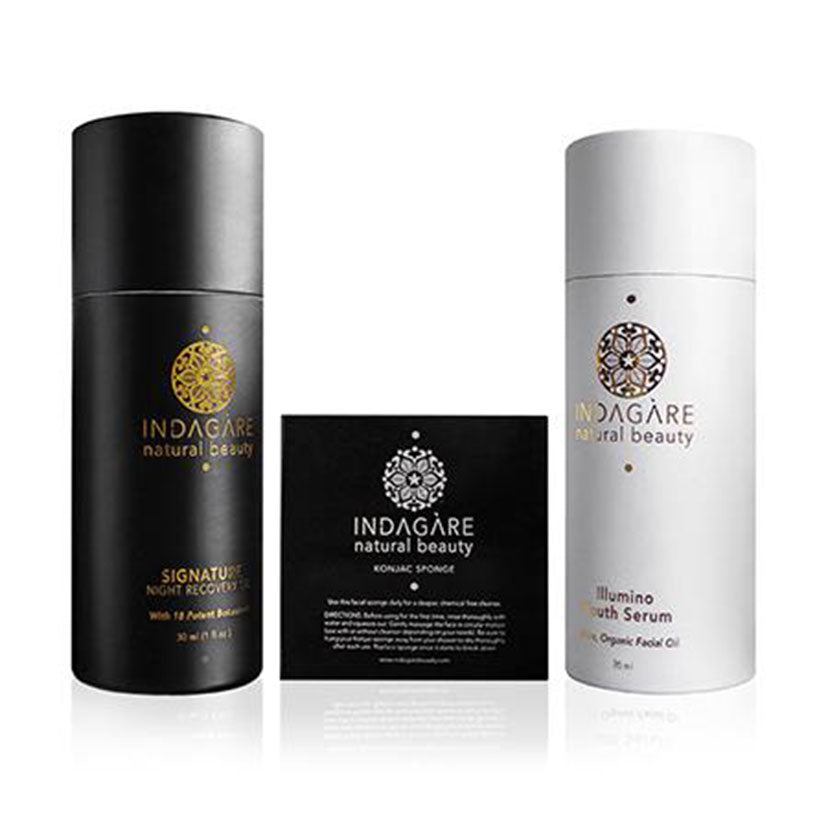
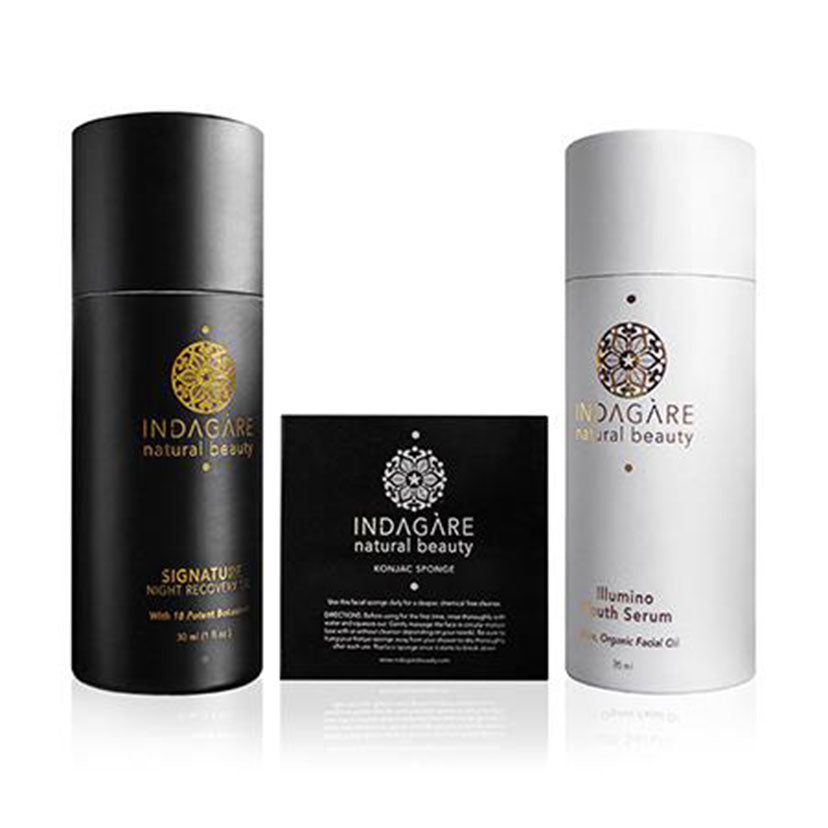
Our Illumino Youth Serum is 100% pure prickly pear seed oil: undiluted, organic, and ethically sourced from women's cooperatives in Morocco.

It has good company, too. Rosehip oil offers a natural source of vitamin A along with vitamin C and essential fatty acids, supporting cell turnover and helping to soften scarring and dark marks.
Oil-soluble vitamin C brightens like the water-based version everyone raves about, but without the instability and sting.
Argan oil is rich in vitamin E and fatty acids that protect against the oxidative stress behind pigmentation while nourishing the barrier.
Sea buckthorn brings vitamin C, vitamin E and carotenoids for a naturally brightening effect.
And tamanu oil, with its anti-inflammatory streak, is especially handy for the dark marks acne leaves behind.

Related blog: Read in detail about the best skincare products in Australia for fading hyperpigmentation on mature, sensitive skin.
What This Looks Like in Practice
You don't need a fourteen-step routine. You need the right few things, used consistently.
In the morning, think protection. Start with a non-stripping cleanser – our Luminesq Dust Cleanser, with antioxidant-rich blue butterfly pea, is ideal.
Then press a little prickly pear seed oil (Illumino Youth Serum) into damp skin so the vitamin E can get to work against free-radical damage.
Layer a light moisturiser over the top if your skin wants it. Then, the non-negotiable: SPF 30 to 50, every single day, rain or shine. This is the step that makes or breaks everything else. Skip it and sun exposure will quietly undo all your effort.
In the evening, think repair. Cleanse twice using Luminesq Dust – first to lift SPF and makeup, then your gentle second cleanse..
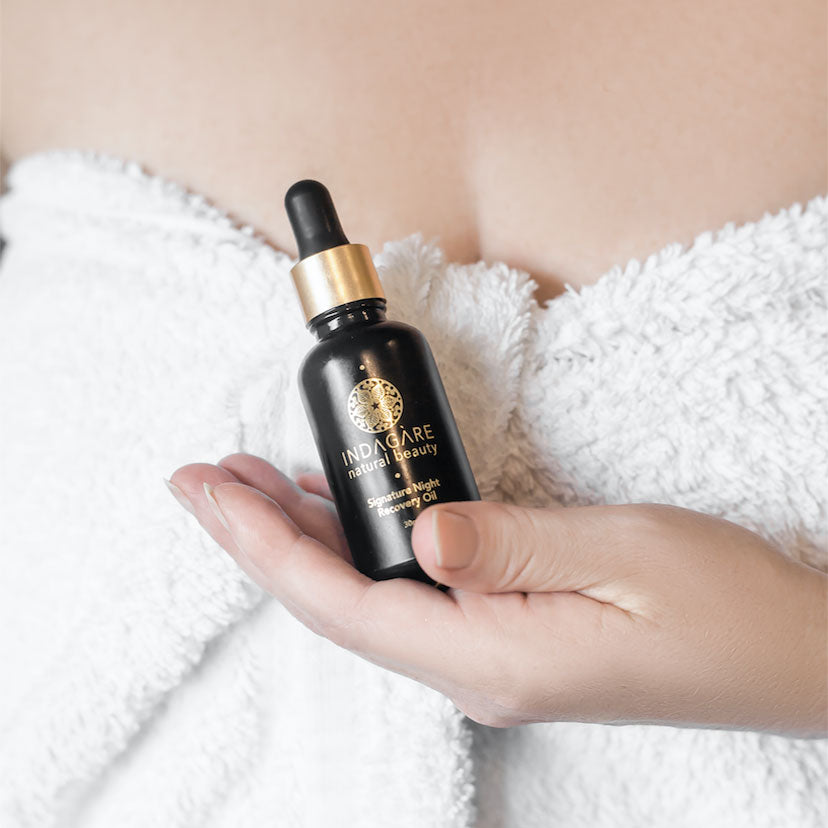
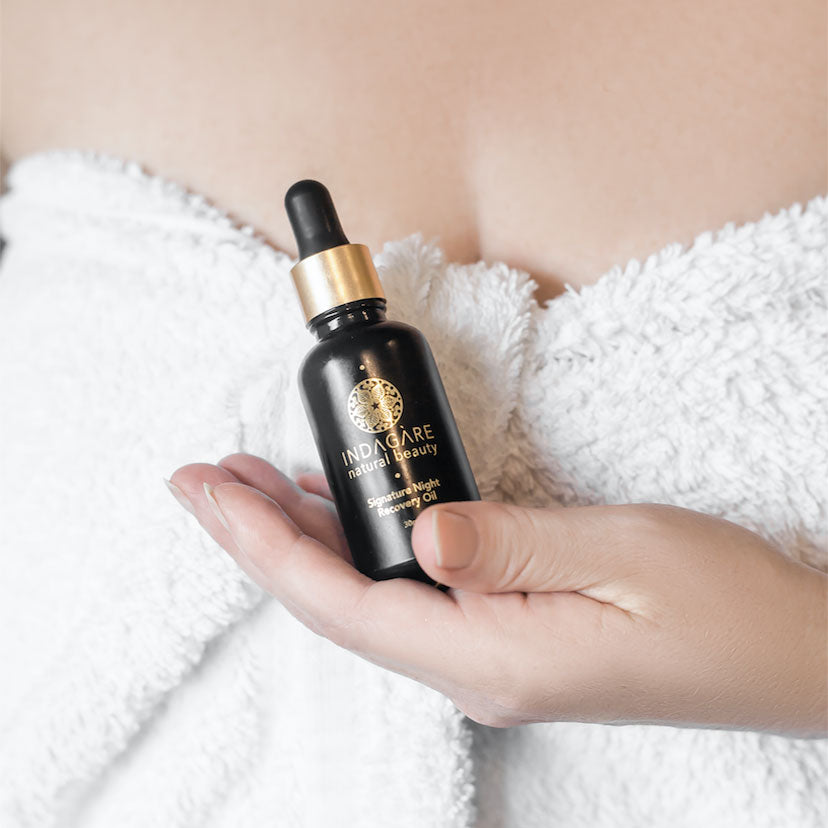
Finish with a richer treatment oil like our Signature Night Recovery Oil with argan and frankincense, which supports overnight repair and barrier strength.

A couple of times a week, a mineral-rich clay mask like our Atonement Superfood Clay Mask earns its place. It deep-cleans and draws out impurities without the stripping that can spark fresh inflammation.
And the natural fruit enzymes in its pineapple extract do the gentle exfoliating for you, lifting away dull, pigmented surface cells to keep turnover ticking over without the harshness of an acid.
That's the sweet spot for pigmentation-prone skin: enough to reveal fresher, more even tone, never so much that you trigger more inflammation. Two or three times a week is plenty – over-exfoliating is its own trigger.
And a word on the things that quietly sabotage progress: don't pick, don't scrub, keep an eye on stress (cortisol can nudge melanin production along), and stay aware of hormonal triggers if they're relevant to you.
Be Honest With Yourself About Results
Natural oils can do a great deal. Over three to six months they can noticeably fade pigmentation, even out overall tone, soften post-inflammatory marks, brighten a dull complexion and – paired with daily SPF – help stop new pigmentation forming. They do it safely, on all skin tones, without the irritation of harsher routes.
What they can't do is erase pigmentation overnight, match the raw speed of prescription treatments, or completely shift deep, stubborn melasma. They won't fix an underlying hormonal cause, and they can't work miracles if you're skipping SPF. (Genetics get a vote, too. Knowing all that upfront is what keeps you going long enough to actually see the change.)


How to Track Your Progress
Because the change is gradual, it's easy to lose heart and quit right before it pays off. The fix is to stop relying on the mirror.
Take a photo in the same light, at the same angle, once a month – you'll never spot the day-to-day shift, but month to month tells the real story.
Get specific about what you're watching, whether that's overall tone, a particular dark spot, or post-acne marks, and look for spots lightening, tone evening out, radiance lifting and pigmented areas shrinking.
Give any new approach a solid eight to twelve weeks before you decide whether it's working.
When to Call in Backup
Natural approaches are brilliant, but they're not the answer to everything. If your pigmentation is very dark or widespread, if it's genuinely knocking your confidence, if you've got true melasma that isn't budging, or if you want faster results for a specific event, it's worth seeing a dermatologist or experienced aesthetician. The best of them will happily combine gentle professional treatment with a natural routine rather than insisting on one or the other.
A Little Help From the Inside
Skin is an organ, and it responds to what you feed it. Vitamin C (citrus, berries, kiwi, capsicum) and vitamin E (nuts, seeds, spinach) both support a brighter, more even complexion, while omega-3s from oily fish, flaxseed and chia help calm inflammation. A steady supply of antioxidants – berries, green tea, a little dark chocolate – never goes astray, and some people find a glutathione or niacinamide supplement helpful for pigmentation specifically.

The Bottom Line...
Fading hyperpigmentation naturally is absolutely possible.
It asks for the right oils, consistent daily use, religiously applied SPF, and a bit of patience while your skin does the work.
Yes, it's slower than the aggressive stuff – but it's kinder, safer for sensitive and reactive skin, far less likely to trigger rebound pigmentation.
Plus, it'll leave you with healthier, more resilient skin rather than a stripped and sensitised version of what you started with!
Your skin didn't develop pigmentation overnight, and it won't fade overnight either. But with the right natural approach, a more even, radiant complexion is well within reach – and that's a win in my book.
Cath x
Quick FAQ:
Q: How long does it take to see results with natural oils?
A: Most people see initial improvement around four to six weeks, with significant fading over three to six months. Deeper, more stubborn pigmentation can take longer. The change is gradual rather than dramatic, so monthly progress photos are far more reliable than the daily mirror check.
Q: Can I use natural oils if I have dark skin?
A: Absolutely – and they're often the safer choice. Harsh treatments and lasers can sometimes cause post-inflammatory hyperpigmentation or paradoxical darkening on deeper skin tones, whereas gentle botanical oils work without that risk. Prickly pear seed oil is a good place to start because it fades pigmentation without triggering the irritation that causes more of it.
Q: Will Vitamin C serum work better than oils?
A: Not necessarily. Vitamin C serums can be effective, but they're also prone to instability and irritation. Oils that contain natural vitamin C and vitamin E can be just as effective and far gentler – and there's nothing stopping you using both, with the serum first and the oil sealing it in.
Q: Can I use retinol alongside natural oils for pigmentation?
A: Yes, carefully. If your skin tolerates retinol, it can speed things along. Apply the retinol first, wait around twenty minutes, then apply your oil, and introduce it slowly to avoid irritation. If your skin is reactive or your pigmentation is hormonal, the gentle oil-only route is often the smarter call.
Q: What's the single most important thing for fading pigmentation?
A: SPF, without question. Without religious daily sun protection, nothing else will work – UV exposure darkens pigmentation faster than anything can lighten it. Think of SPF as the foundation everything else is built on, not an optional extra.
Q: Can hormonal pigmentation be treated with oils?
A: Yes, particularly with prickly pear seed oil, which is gentle enough not to trigger more pigmentation through irritation. Bear in mind that addressing the underlying hormonal cause, where that's possible, will always help the topical work along. Patience matters here – hormonal pigmentation is often the slowest to shift.
Q: Are natural oils safe during pregnancy?
A: Most botanical oils are considered safe, but always check with your healthcare provider first. Pregnancy is a common trigger for melasma, and because many conventional pigmentation treatments are off-limits while you're pregnant, gentle natural oils are often a welcome option during this time.


