


The Best Face Oil for Mature Skin: What Actually Works After 40
There's a specific morning where it clicks.
You've done everything the way you've always done it – cleanse, moisturise, foundation – and by eleven o'clock the foundation has settled into the lines around your mouth like rain water finding a crack in the pavement.
Your skin looks tired. Not because you are tired. Because something underneath has changed, and the routine that carried you through your thirties has quietly stopped holding up its end.
Most of us respond by buying a heavier moisturiser. It works for about a week. Then you're back where you started, with an expensive jar you'll never finish and a vague sense that you're doing something wrong.
You're not. You're just solving the wrong problem.
Here's what's actually happening to your skin after 40, why a face oil does something a moisturiser structurally can't, and how to tell a face oil that's worth $130 from one that's mostly sunflower oil with a story attached.
What actually changes in your skin after 40
Two things. Both of them are about oil.
1. Your skin stops making its own
Sebum production peaks in your teens – which is why teenagers have the skin problems teenagers have – and then declines, steadily, for the rest of your life. By your mid-forties you're producing a fraction of what you did at 25.
We spend our twenties treating sebum like the enemy. Mattifying powder, oil-free everything, blotting papers in the handbag. Then it leaves, and it turns out sebum was never the enemy. It was the sealant.
2. The mortar between your skin cells thins out
The outer layer of your skin – the stratum corneum – works like a brick wall. Skin cells are the bricks. Lipids (ceramides, fatty acids, cholesterol) are the mortar holding them together and keeping water in.
As oestrogen falls through perimenopause and beyond, that mortar thins. The wall gets leaky. Water escapes faster than your skin can replace it – dermatologists call this transepidermal water loss, which is a very dry name for a very visible problem.

Skin looks dull rather than lit from within. It feels tight by three in the afternoon. And fine lines look deeper, because dehydrated skin creases the way a dry leaf creases, while plump skin doesn't. If you want the full picture of what oestrogen decline does to skin, we've written about that separately.
The drier months make this worse – low humidity pulls water out of skin that's already struggling to hold it. If your skin feels fine in February and awful in July, this is why.
Why a face oil does something your moisturiser can't
Turn your moisturiser around and read the ingredients list. The first one is almost certainly aqua. Water.
A conventional moisturiser is mostly water, plus emulsifiers to hold the water and oil together, plus a preservative system to stop the water growing things, plus a comparatively small amount of the oils and actives you're actually paying for.
It's a delivery system, and a lot of what it's delivering is water that evaporates off your face within the hour.
A face oil contains no water. No water means no emulsifiers, no preservative system, and no filler. Every drop is the active part.
It does two jobs your moisturiser can only gesture at:
It replaces what your skin has stopped making. Linoleic acid, oleic acid, vitamin E, sterols – the same class of lipids that used to be in your sebum, delivered from outside because the inside supply has dropped off.
It slows the evaporation. A layer of oil sits on the surface and stops the water underneath from leaving. Not by suffocating your skin – by doing the job the mortar used to do.

Which leads to something most beauty brands won't say out loud: you might need fewer products than you think. If your face oil is nourishing and sealing, the $180 cream you're layering under or over it may be doing very little except adding a step and a smell. Try the oil on its own for two weeks before you assume you need both.
What to look for in the best face oil for mature skin
Not all face oils are useful for skin over 40. Four things separate the ones that earn their place from the ones that are marketing.
1. A high linoleic acid content
This is the single most useful number, and almost nobody publishes it. Linoleic acid is an omega-6 fatty acid your skin uses to build its barrier, and it's the fatty acid that declines most as skin ages.
Oils high in linoleic acid – prickly pear seed, rosehip, evening primrose – absorb quickly and feel light. Oils high in oleic acid instead – coconut, olive, marula – are heavier, sit on the surface longer, and are more likely to congest skin that's still occasionally breaking out.
If you're over 40 and your skin feels dry but you're still getting the odd hormonal spot, this distinction is the whole ballgame.

2. Cold-pressed, small batch, and genuinely fresh
Plant oils oxidise. An oil pressed with heat, shipped in bulk and sat in a warehouse for eighteen months has lost a meaningful share of the antioxidants you're paying for – and oxidised oil doesn't just underdeliver, it can irritate.
Cold-pressing preserves the fragile compounds. Small batches mean the bottle you're holding was pressed recently.
This is unglamorous, but it matters more than any hero ingredient on the front of the box.

3. No synthetic fragrance
Fragrance is the most common cause of irritation in skincare, and skin over 40 is measurably more reactive than skin at 30 – thinner barrier, slower repair. A good face oil smells like the plants it's made from. If it smells like a candle, ask why.
4. Concentration, not filler
Plenty of oils marketed as “prickly pear” or “rosehip” contain a token amount of the expensive oil floating in a base of cheap sunflower or grapeseed. There's no legal requirement to disclose percentages. What you can do is read the ingredients list in order – if the hero oil appears after the cheap carrier, you know where you stand.

The best face oils for mature skin, ingredient by ingredient
If you're building a shortlist, these are the oils actually worth looking for on a label.
Prickly pear seed oil
The most useful oil available for mature skin, and the most expensive – roughly a tonne of fruit yields about a litre of oil, which is why so few brands use it at any real concentration. It's around 60% linoleic acid, which makes it unusually light for how nourishing it is, and it carries more vitamin E than argan oil. On skin it reads as brightness: tone looks more even, skin looks plumper, and it absorbs without leaving anything behind.
Indagare's prickly pear seed oil is sourced from Berber women's cooperatives in Morocco, cold-pressed using traditional methods and bought in small, fresh batches.

Argan oil
The one everybody's heard of, and still genuinely good – high in vitamin E and sterols, non-comedogenic, and it improves the way skin feels almost immediately. It's more oleic than prickly pear, so it's better as a supporting oil in a blend than as the whole story.
Rosehip oil
High in linoleic acid and naturally containing trans-retinoic acid, which is why it has a reputation for helping the look of uneven tone and fine lines. It's also one of the fastest-oxidising oils on this list, which is exactly why freshness and cold-pressing matter so much.

Sea buckthorn and pomegranate seed oil
The night-shift oils. Both are dense in antioxidants, both are deeply nourishing, and both are better suited to overnight use than under makeup – sea buckthorn in particular has a colour that needs formulating around.
Neroli
Not a carrier oil but worth naming: distilled from orange blossom, gently astringent, and the reason a well-made face oil can leave skin looking firmer rather than simply softer.

The best face oil for dry skin over 40
Worth separating two things that get muddled constantly, because half the advice online is written for one and half for the other.
Dry skin lacks oil. Dehydrated skin lacks water. After 40 you usually have both at once – which is why you can slather on a hydrating serum and still feel tight an hour later, and why the internet's advice on this contradicts itself.
A face oil solves the first directly and the second indirectly. It replaces the oil, and the oil holds the water in. (Face oil, facial oil – same thing. The labels use both.)
If dryness rather than fine lines is your main complaint, four things:
Look at your cleanser before you blame the oil. A foaming sulphate cleanser strips more oil in ninety seconds than any face oil can put back overnight. This is far and away the most common reason a genuinely good oil “isn't working”.
Go richer at night. The Signature Night Face Oil is the more nourishing of the two, and night is when you can afford the weight – you're not layering makeup over it.
Don't skip the morning one. Dry skin feels worst by mid-afternoon, and that's a morning problem, not an evening one.
Give it the full eight weeks. Barrier repair isn't fast. Two weeks tells you whether your skin tolerates an oil. It doesn't tell you whether it's working.
Which face oil should you buy?
Here's the honest version of the recommendation, in the order most people should approach it.
Mini Day and Night Face Oil Set
$74.00 $83.00 BEST PLACE TO START
Start here if you've never used a face oil. Travel sizes of both hero oils – the same formulations as the full bottles, nothing watered down – with roughly four weeks of use in each.
Four weeks is long enough to know whether your skin agrees with an oil. It's also cabin-friendly, which is a fair reason on its own. 30-day money-back guarantee.

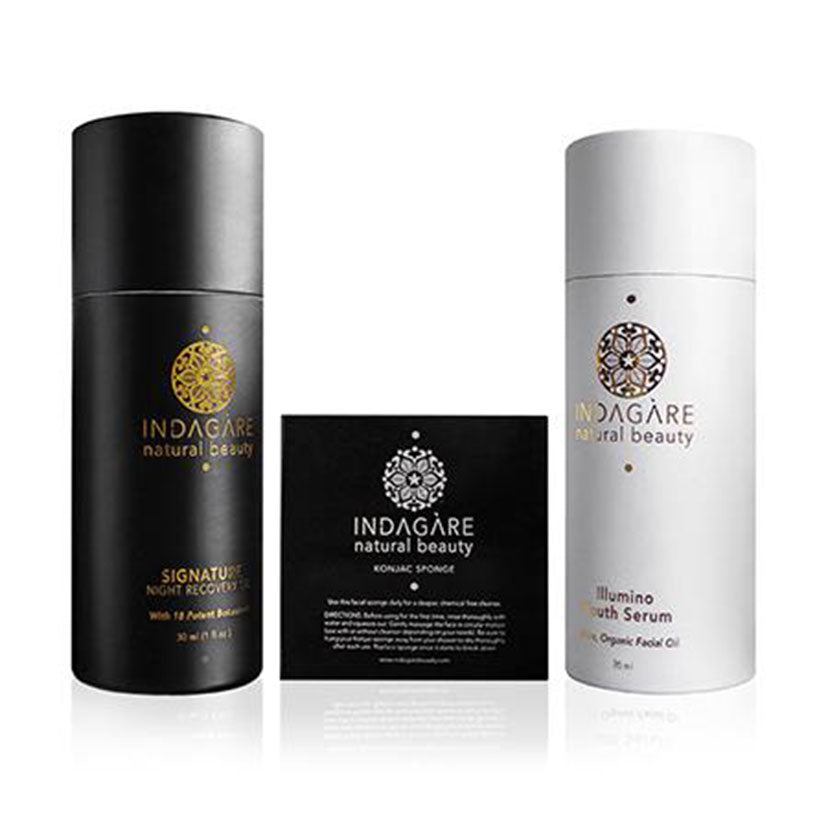
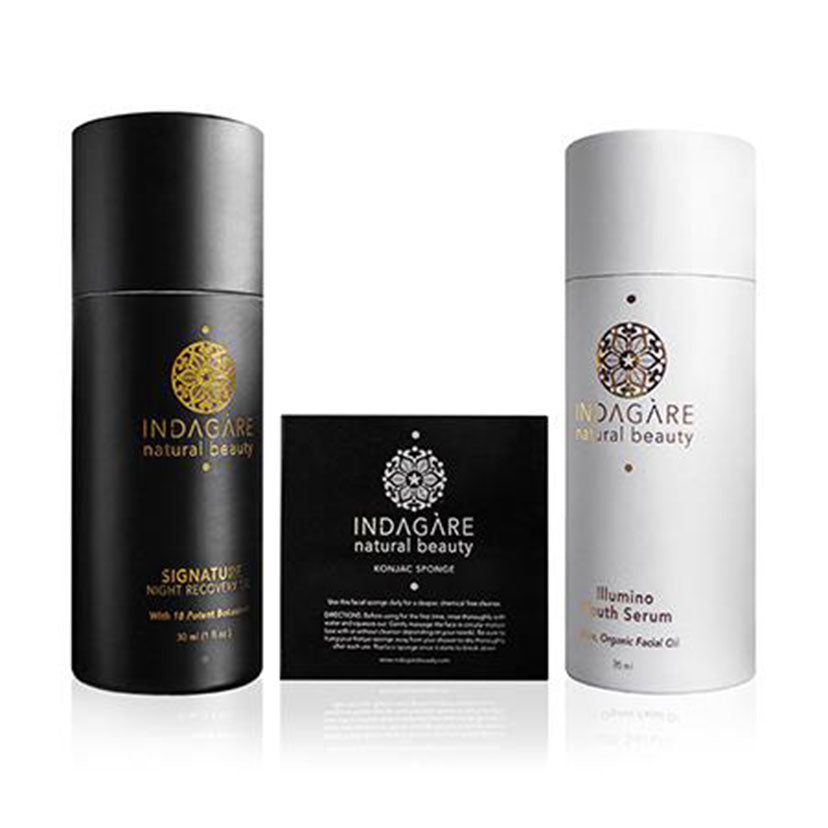
Illumino Youth Serum – Organic Prickly Pear Seed Oil | 30ml
$129.00 MOST POPULAR
The morning oil, and the one to buy if you're only buying one. Certified-organic prickly pear seed oil with neroli and argan – light enough to sit under makeup without sliding, concentrated enough that four to five drops covers your whole face. Skin looks brighter and more even; foundation sits better rather than settling into lines.
At four to five drops a day, one bottle lasts around 90 days, which works out at roughly $1.40 a morning.

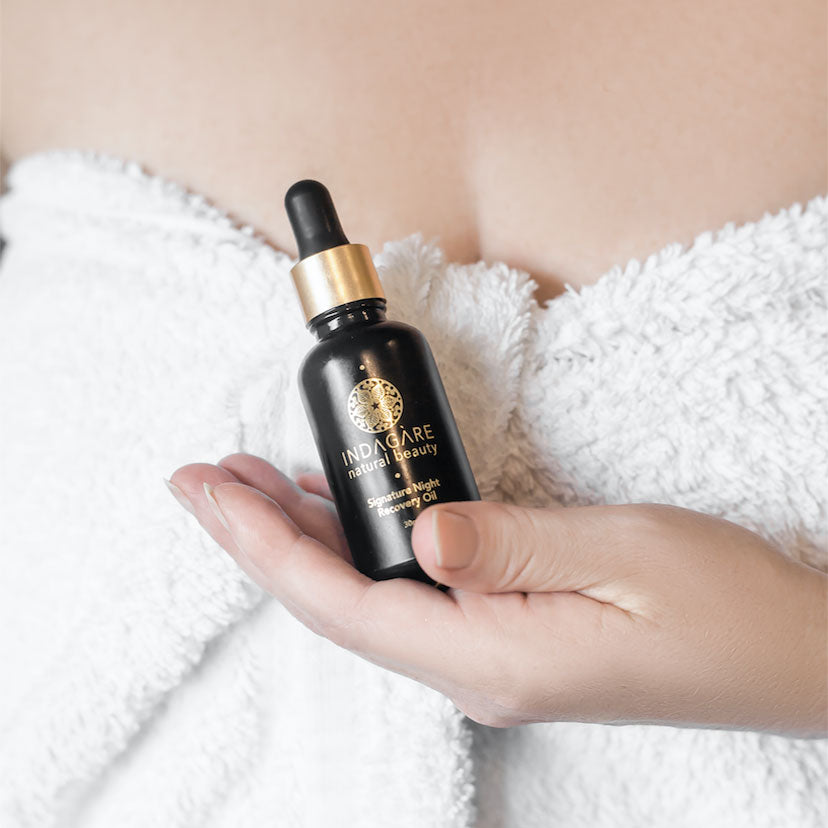
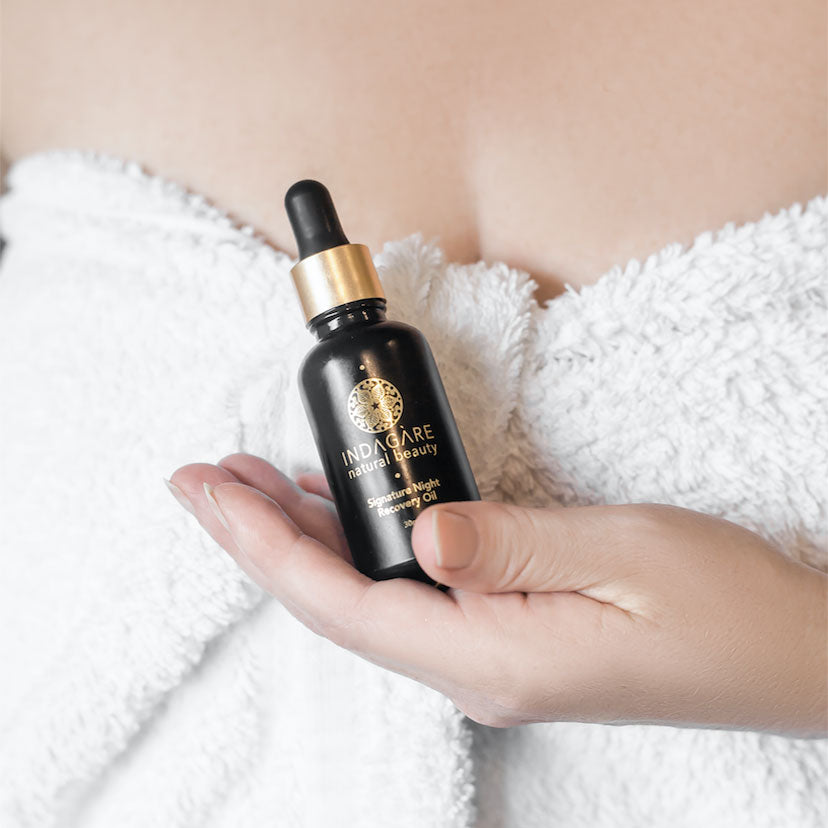
Signature Night Face Oil | 30ml
$84.00 MOST LOVED SCENT
The night oil. Eighteen botanicals including sea buckthorn, pomegranate and rosehip – richer than the morning oil, because at night you're not layering anything over the top and your skin does its repair work while you sleep.
Winner, Best Overnight Facial Oil, The Beauty Shortlist Awards (Global), 2023.

Morning & Night Face Oil Set | Anti-Ageing Duo
$179.00 $213.00 BEST VALUE
Both full-size oils together, saving $34 against buying them separately. This is what most of our long-term customers end up on, and the reason is straightforward: the two oils do different jobs at different times of day, and the results people report come from doing both consistently rather than either occasionally.
Around three months of use for the pair. Free standard shipping.

All Indagare products are made in Australia, PETA-certified cruelty-free, and free from parabens, sulphates, synthetic fragrance and mineral oils. Every full-size product carries a 30-day money-back guarantee. You can see the best face oils Australia has for skin over 40 together in one place, or if you'd rather build the whole thing out, here's a full skincare routine for skin over 40.
How to use a face oil so it actually works
Most people who say face oils don't work for them are applying them wrong. Three things:
Apply to damp skin. This is the one that changes everything. Oil doesn't hydrate – it seals. If you apply it to bone-dry skin you're sealing in nothing. Apply it while your face is still slightly damp from cleansing and you're sealing in water. Same oil, completely different result.
Warm it in your palms first, then press. Four to five drops, warmed between your hands, pressed into your skin with upward pressure rather than rubbed. Pressing helps it absorb. Rubbing mostly moves it around and drags at skin that's already lost some of its bounce.
Oil goes last. If you're using anything else, the oil is the final step – it seals everything underneath it. The exception is sunscreen, which needs to go on top and needs its own uninterrupted layer. Give the oil a couple of minutes to absorb first.
And give it eight weeks. Skin texture and hydration usually shift inside two to four weeks. Firmness and the look of fine lines take longer, because you're waiting on your skin's own renewal cycle, and that cycle slows down with age. This is not the category where you get a verdict in three days.
The honest bit: what a face oil won't do...
It won't fill a deep line. It won't lift what's descended. It won't undo thirty years of Australian sun in a fortnight, and any brand telling you otherwise is either lying or hoping you won't check.
What it will do is address the specific problem that makes skin over 40 look older than it is: dryness, dullness, and a barrier that's stopped holding water.
Of course, that's not the whole of ageing. But it is the part you can actually change, it's the part that shows up in photographs, and it's the part that responds fastest.
If you want to reverse gravity, we're not your brand. If you want your skin to look like the best version of your own skin at your own age, this is exactly what our face oils are made for.

What women over 40 say
We don't run consumer trials, so we won't quote consumer-trial statistics at you. What we have is what customers write, unprompted, after they've bought and used the products.
Across over a thousand verified purchase reviews of our three face oil products, 95.6% are five-star, with an average rating of 4.93 out of 5. Every one of those reviews is unprompted and tied to a verified order – no incentives, no solicited testimonials. (Figures as at the the date of article publication.)
A few of them, in their own words:
“I'm astounded by these 2 oils. I've been using them for a month or so and my wrinkles have halved and my skin feels amazing. Soft and happy. I've used many types of products but this one is a stand out. I'm 66 years old.”
“I've been using Indagare's facial oil products since 2019 and the results speak for themselves – every time I go in to a beautician they always remark on the excellent condition of my skin and how hydrated it looks and feels. At 55 it's a great compliment.”
“I'm a first time user with 59 year old fair skin. At first I was a little worried about using an oil in case my skin was left greasy especially at night time. But I have been using it now for a few weeks and I really love it. The night time oil leaves my skin smooth and it leaves no marks on my satin pillowcase, and the day time one allows for a lovely smooth foundation.”
“The oil gives a beautiful shine to the skin, which makes my menopausal dry skin look a lot younger than it is.”
“I have very sensitive dry skin and I found the day and night oils have moisturised and evened out the texture of my skin. Best I've ever used, and with no reaction.”
Frequently asked questions:
Will a face oil make my skin oily or cause breakouts?
Usually the opposite. Skin that's dehydrated often over-produces oil trying to compensate, which is why so many women over 40 have skin that's simultaneously dry and breaking out. Restoring the barrier tends to settle that. The caveat is which oil: high-linoleic oils like prickly pear seed absorb quickly and are non-comedogenic, while heavier high-oleic oils like coconut are much more likely to congest. Patch test on the inside of your wrist first if you're prone to reactions.
Do I still need a moisturiser if I use a face oil?
Possibly not. Try the oil alone for two weeks – many women find it's enough on its own, particularly with the richer night oil. If your skin still feels tight, layer a moisturiser underneath and the oil on top. Never the other way around; oil can't penetrate a cream, but a cream can absorb under an oil.
What's the best face oil for mature skin if I can only afford one?
A morning oil, because it works under makeup and you'll use it every single day. Our Illumino Youth Serum is the one most people start with. If budget is the constraint, the Mini Day and Night Set at $74 gets you both oils for four weeks and tells you what your skin actually wants before you commit to a full bottle.
How long before I see a difference?
Texture and hydration typically shift within two to four weeks. Changes to the appearance of firmness, tone and fine lines usually show at the 60 to 90 day mark with consistent daily use. All full-size products carry a 30-day money-back guarantee, so there's no risk in finding out.
Can I use a face oil around my eyes?
Yes, gently, and with a light oil rather than a rich one. The skin there is thinner and shows dryness first. Press rather than rub, and keep to the orbital bone rather than the lash line.
Is a face oil suitable for sensitive or reactive skin?
Often better tolerated than a conventional moisturiser, because there's no water in the formula, and therefore no preservative system and no emulsifiers – two of the most common triggers. What matters is that the oil is cold-pressed, fresh, and free of synthetic fragrance. Every Indagare formulation is made without parabens, sulphates, phthalates, synthetic fragrance or mineral oils.
Are Indagare's face oils made in Australia?
Yes. Every product is formulated and manufactured in Australia and independently certified cruelty-free by PETA. The prickly pear seed oil and argan oil are sourced from Berber women's cooperatives in Morocco, where they're cold-pressed using traditional methods.
Where to start
If your skin has changed and your routine hasn't, start with the oil. It's the step that addresses what actually changed.
New to face oils? The Mini Day and Night Face Oil Set ($74) gives you four weeks of both. Ready to commit? The Morning & Night Face Oil Set ($179, saving $34) is three months of the routine our long-term customers keep coming back to.
Either way, you've got 30 days and a full refund if your skin disagrees with us.
Cath & the Indagare Team


